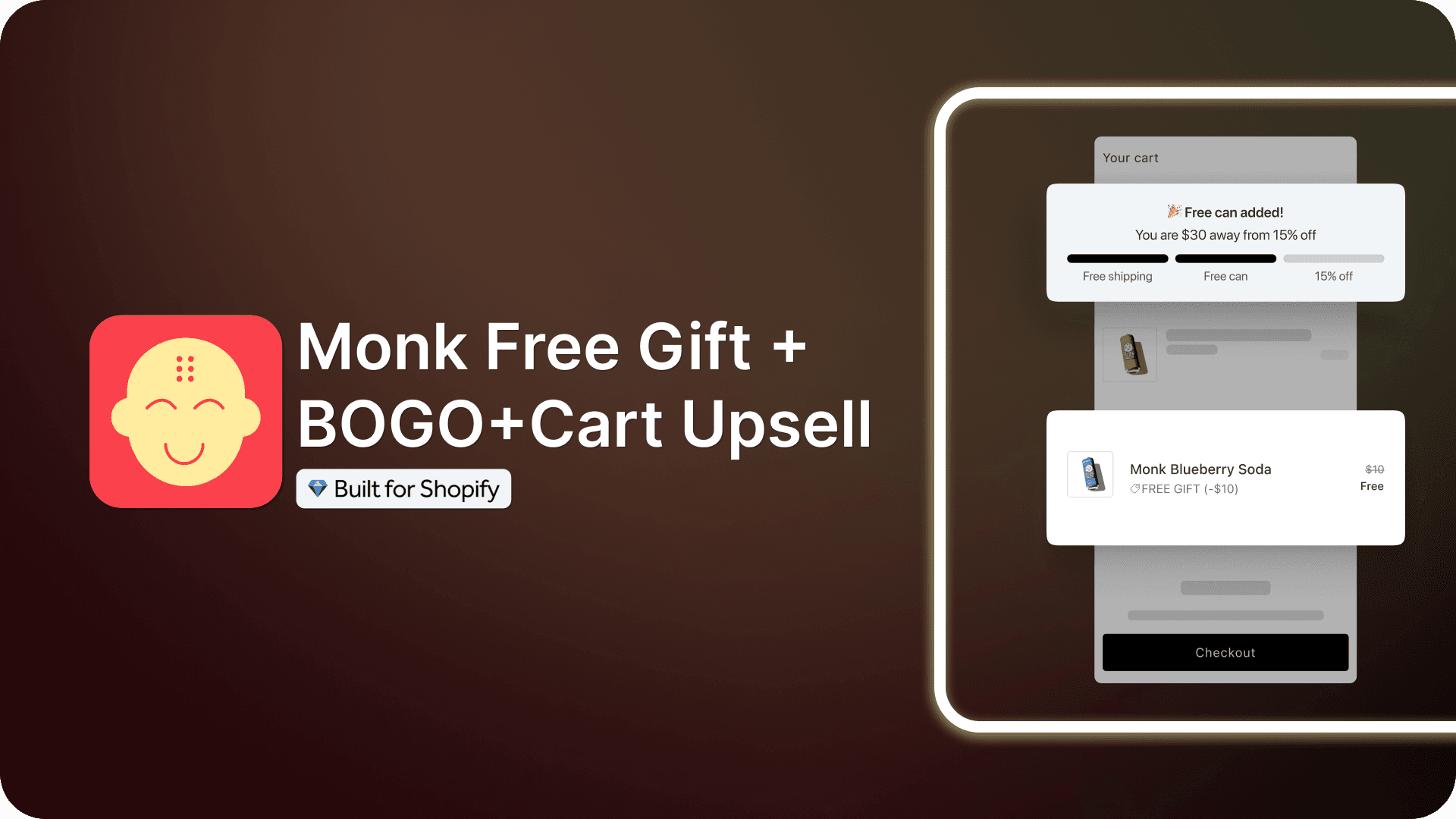
Cart Upsell Strategies for Shopify Stores to Increase AOV
Summary
Cart upselling helps Shopify stores increase revenue by maximizing existing traffic rather than acquiring more visitors. It involves offering upgrades, add-ons, or bundles at key points like product pages, cart, checkout, and post-purchase. Strategies such as product add-ons, bundles, subscriptions, and volume discounts work by leveraging psychology like price anchoring, social proof, and relevance. Effective upsells improve average order value, ROAS, and customer lifetime value. Success depends on timing, relevance, simplicity, and limiting choices to avoid overwhelming customers.

Ravish (RV)
Senior Content Writer
Ravish is an ecommerce and SaaS marketing expert with 6+ years of experience in Shopify and ecommerce and 10+ years of experience in marketing, and growth strategy. He has worked closely with Shopify merchants to solve real ecommerce challenges and shares practical, research-backed insights, industry best practices, and emerging trends.
Key Takeaways
Cart upselling helps Shopify stores increase revenue by maximizing existing traffic rather than acquiring more visitors. It involves offering upgrades, add-ons, or bundles at key points like product pages, cart, checkout, and post-purchase. Strategies such as product add-ons, bundles, subscriptions, and volume discounts work by leveraging psychology like price anchoring, social proof, and relevance. Effective upsells improve average order value, ROAS, and customer lifetime value. Success depends on timing, relevance, simplicity, and limiting choices to avoid overwhelming customers.
You might think running a profitable Shopify store means getting more visitors to your site. Spoiler alert: It’s not.
It's about making the most of the customers who are already there. Which is why you should pay more attention to cart upselling.
In fact, brands that use upselling are seeing average revenue increases of 10–30%. Put simply, a single well-placed upsell, shown to the right customer at the right moment, can be the difference between a $35 order and a $60 one.
This guide covers everything you need to know: what cart upselling in Shopify actually is, where to place upsells throughout your funnel, the psychology that makes them work, and the best cart upsell strategies for Shopify stores to implement today.
What is Cart Upselling in Shopify?
Cart upselling is a sales technique that encourages customers to upgrade or expand their purchase before they complete checkout. In the context of a Shopify store, this typically means recommending a premium version of a product, a complementary add-on, or a bundle offer at the moment a customer is reviewing their cart.
It's important to distinguish upselling from cross-selling, as the two terms are often used interchangeably but serve different purposes:
Upselling means encouraging the customer to buy a higher-tier or upgraded version of the product already in their cart. For example, if a customer has added a 250ml face serum to their cart, an upsell would suggest the 500ml version at a better per-unit price.
Learn the difference between upselling and cross-selling in Shopify
Cart upselling is presenting offers at the cart stage, whether on the cart page or just before the customer hits checkout. Because it’s one of the highest-converting places to show upsell offers since the customer is already in buying mode. |
Placement of Upsells in the Shopify Funnel
There are multiple touchpoints throughout the Shopify funnel where you can present upgrade offers, and each one has its own psychology and conversion dynamic. Understanding where to place your upsells is just as important as knowing what to offer.
Product Page Upsells
The product page is often the first place merchants experiment with upselling, and for good reason. When a customer is browsing a product, they're evaluating their options, which makes it the ideal moment to show them a premium version or a bundle.
For example, if someone is looking at a $299 smartphone, showing them the $359 version with additional features right on the product page is price anchoring. The customer sees the higher price first, which makes the premium option feel more reasonable by comparison.
Pro Tip: Keep the product page upsells visually clean and clearly show the value difference between tiers. It shouldn’t disrupt the shopper's journey to the cart.
Cart Page / Cart Drawer
The cart page and, increasingly, the slide-out cart drawer are widely considered the highest-converting placements for upsell offers. At this point in the journey, the customer has decided to buy. Adding a relevant item at this stage feels natural rather than intrusive.
Cart drawers, in particular, outperform traditional cart pages for upselling. Unlike a cart page that requires a new URL load, a cart drawer slides out over the current page.
The customer stays in context, and the recommendation appears right alongside their existing items. For mobile shoppers, especially, this seamless experience significantly improves conversion.
Pro Tip: Include a progress bar showing how close the customer is to free shipping to optimize your cart drawer.
Checkout Upsells
Checkout upsells appear when a customer is completing their order, typically on the checkout page itself. These are subtle, frictionless recommendations that appear as the customer is entering their payment details.
Shopify Plus merchants have more flexibility here due to checkout customisation options. For standard Shopify plans, checkout upsells are usually handled by apps that display add-on offers above or within the order summary.
Pro Tip: Keep the checkout upsells subtle. This is not the place for bold, intrusive pop-ups. A small, well-placed suggestion for a complementary item or an upgrade can lift AOV without disrupting the checkout flow.
Post-Purchase Upsells
Post-purchase upsells appear after the customer has completed their order but before they leave your store. They are placed on the order confirmation or ‘thank you’ page. Because the customer has already provided their payment details, these offers can be accepted with a single click, without re-entering information.
Important: This makes post-purchase upsells uniquely effective. There's no checkout friction, and the customer is in a positive, satisfied state of mind after just making a purchase.
The Psychology Behind Cart Upsells
Cart upselling is applied consumer psychology. When done with genuine value in mind, it enhances the shopping experience rather than detracting from it.
Here are the core psychological principles at work:
Price Anchoring: Show a premium option first to make the upgrade feel like the smarter deal
Commitment and consistency: Leverage the micro-commitment of adding to cart; buyers already in ‘yes’ mode convert more easily
FOMO: Use limited-time offers and low-stock alerts to nudge hesitant customers into action
Social proof: Display ratings and ‘X customers bought this’ to remove doubt at the moment of decision
Reciprocity: Offer value first (free shipping, a gift, a discount) to naturally encourage customers to give something back
Relevance: Match product recommendations to what's in the cart; personalised upsells feel helpful, generic ones feel like ads
Important: 87% of shoppers are willing to pay more for products from brands they trust. Thus, making relevance and personalization important factors when considering cart upsell strategies.
Why Cart Upsells Matter for Shopify Stores
Here are a few business cases that make cart upselling practices worth your while:
They increase average order value without increasing ad spend.
Your customer is already in your store. You've already paid to acquire them, whether through ads, SEO, email, or social. Every additional dollar they spend is essentially free revenue, since you're not spending more to reach them.
They improve return on ad spend (ROAS).
Your ROAS improves in proportion to your average order value. For example, if you're spending $10 to acquire a customer and their average order is $40, that's a 4x ROAS. Similarly, if upsells push it to $55, your ROAS is 5.5x with the same ad budget.
They increase customer lifetime value (LTV).
Customers who buy more per order often have higher LTV. They're more invested in your brand, more likely to return, and more likely to refer others.
The impact is measurable and immediate.
Unlike SEO or brand-building, upsell strategies generate visible results quickly.
The cart is the highest-intent page on your store.
Every visitor who opens their cart is ready to buy. But Shopify stores waste this opportunity. A store processing just 500 orders per month, with a 5% cart upsell acceptance rate at a $12 average add-on, generates $300 in additional monthly revenue from orders that were already happening. That's $3,600 per year from one upsell widget.
Types of Cart Upsell Strategies (with Examples)
There are several distinct upsell and cross-sell strategies available to Shopify merchants. Let’s have a look at them. along with how to set up using Monk.
Product Add-Ons
Add-on upsells present a small, low-cost product that enhances or protects the main item in the cart. These are among the highest-converting upsell offers because they're low-risk decisions for customers. Because the price is small relative to the main purchase, and the relevance is immediately obvious.
Examples:
A customer buys a camera → upsell a lens cleaning kit or a memory card
A customer buys a pair of trainers → upsell performance insoles or sock bundles
A customer buys a skincare serum → upsell a travel-size bottle or an applicator brush
The key to making add-on upsells work is keeping the price proportional to the main cart value. The general rule of thumb is to cap the upsell at roughly 25% of the original cart value. A $5 add-on on a $30 order feels negligible; a $30 add-on on a $35 order feels pushy.
Frequently Bought Together (FBT)
Frequently Bought Together (FBT) is one of the most recognizable cross-sell formats in ecommerce. It shows customers a curated group of products that other shoppers commonly purchase together, creating a sense of social validation alongside a practical suggestion.
Examples:
A customer buys a yoga mat → FBT suggests yoga blocks, a strap, and a carrying bag
A customer buys a coffee maker → FBT suggests a grinder, specialty coffee beans, and a cleaning kit
A customer buys a gaming console → FBT suggests an extra controller, a headset, and a charging dock
FBT works especially well for stores where products naturally form systems. The social proof element, that real customers regularly buy these items together, makes the recommendation feel trustworthy rather than algorithmic.
Bundle Offers in Cart
Bundles take the FBT concept a step further by packaging products together at a slight discount. Rather than showing individual products to add, this strategy presents a ready-made combination with a small price incentive for taking the bundle over buying items individually.
Examples:
‘Buy the Starter Kit (product A + product B + product C) for $45 instead of $58’
‘Complete your routine: Add the full morning skincare set for $29 (save $11)’
‘Game Night Bundle: Add two expansion packs for $22 instead of $28’
Bundles increase AOV significantly because the perceived saving motivates customers to spend more in absolute terms. You can display the original price alongside the bundle price, reinforcing the anchoring effect and making the offer feel like a steal deal.
Upgrade to Premium Products
This is the classic upsell, encouraging the customer to trade up to a better version of what they've already chosen. Unlike add-ons, this type of upsell replaces the item in the cart with a higher-value item.
Examples:
A customer adds a standard subscription to their cart → upsell the annual plan at a per-month saving
A customer adds the 250ml version of a product → upsell the 500ml at a better value
A customer chooses the standard material → upsell the premium material version
The key to upgrading upsells is making the value difference crystal clear. A simple comparison, like ‘Standard vs. Premium’, works very well here, particularly when combined with highlighted benefits (‘Pro version includes X, Y, Z’). Avoid making customers feel they made a bad choice by selecting the standard version; frame the upgrade as an enhancement, not a correction.
Subscription Upsells
Subscription upsells convert one-time purchases into recurring orders. For consumable products like supplements, skincare, coffee, cleaning products, and pet food, offering the option to ‘subscribe and save’ at the cart stage is a good way to grow revenue.
Examples:
‘Subscribe and get 15% off every order + free shipping’
‘Never run out: Set up a monthly delivery and save $6’
‘Subscribe and pause or cancel anytime’
Subscription upsells benefit the merchant through predictable revenue and higher customer lifetime value. The critical element here is making the subscription feel flexible and risk-free. Customers are reluctant to commit to recurring charges, so emphasizing ‘pause anytime’ or ‘no commitment’ significantly improves acceptance rates.
Volume Discounts
Volume discount upsells incentivize customers to buy more units of the same product at a lower price per unit. This works particularly well for consumable or stackable products.
Examples:
‘Buy 2, get 10% off. Buy 3, get 20% off’
‘Stock up and save: 3 bottles for $45 (usually $54)’
‘Add 2 more and unlock free express shipping’
Progress bars showing how close they are to the next tier (e.g., ‘Add 1 more item to unlock the 3-for-2 deal’) are especially effective at pushing customers over the threshold.
Best Practices for High-Converting Cart Upsells
Having the right type of upsell is only half the equation. How you present it matters just as much as what you're offering. Follow these best practices:
Set a free shipping threshold: Place it ~30% above your current AOV to motivate customers without giving away margin on every order
Pair the bar with a suggestion: Implement banners like ‘You're $12 from free shipping’ because it works harder when followed by a specific product that closes the gap
Keep recommendations relevant: Avoid irrelevant upsells because instead of converting, they damage trust and increase abandonment
Limit to two options: Show one complementary product and one upgrade since more choices create decision fatigue
Use a carousel for extras: Let customers swipe rather than displaying everything at once if you need to show more
Switch to a cart drawer: Keep customers on-page, reduce friction, and present upsells in context, especially critical for mobile users
Add social proof: Reduce customer hesitation so they can make their purchasing decision smooth, using reviews or showing how many people have made the same purchase
Improve Your Cart Upsell Strategies with Monk
It’s simple to grasp that cart upselling is one of the most direct and measurable ways to grow revenue from your existing Shopify store. It doesn't require more traffic, a bigger ad budget, or a product overhaul.
Instead, you need to understand your customers, know which products complement each other, and present the right offer at the right moment in the right format.
The merchants who see the biggest results from upselling are those who treat it as a customer service tool. In simpler words, they want to help shoppers discover products they'd genuinely value and hadn't yet considered.
Start with one strategy: a free shipping progress bar paired with a single, highly relevant product recommendation in your cart drawer. You can configure this setting in Monk and measure the impact on AOV over two weeks. Then layer in a second strategy, measure again, and refine from there. Check the detailed Cart upsell set up guide here.
Frequently Asked Questions (FAQs)
What is a cart drawer upsell?
A cart drawer upsell is a product recommendation displayed within a slide-out cart panel that appears when a customer clicks the cart icon. Unlike a traditional cart page that loads a new URL, the cart drawer slides over the current page, allowing you to present lower-friction offers without disrupting the browsing experience. This format is particularly effective for Shopify stores because it keeps the customer in context, staying on the product or collection page, while incentivizing them to add more to their order.
Do cart upsells affect conversion rates?
When implemented correctly, cart upsells do not negatively impact Shopify conversion rates; instead, they increase revenue per session. The key is relevance and restraint: showing one or two highly relevant offers in a non-intrusive format helps increase Average Order Value (AOV) without overwhelming the shopper. Merchants only see a drop in conversion if they use aggressive pop-ups or irrelevant recommendations that interrupt the checkout flow.
How does cart upselling increase average order value?
Cart upselling increases Average Order Value (AOV) by encouraging customers who are already committed to a purchase to add more items to their cart before they reach checkout. This is achieved by offering complementary add-ons, volume discounts for buying more units, or upgraded versions of the selected product. Because the customer has already expressed high buying intent, the psychological resistance to adding a small, relevant item is much lower than on a standard product page.
Which cart upsell strategy works best for Shopify stores?
The best cart upsell strategy for your Shopify stores depends on your niche, but free shipping thresholds and product add-ons are universally effective starting points. For beauty and wellness brands, ‘frequently bought together’ bundles often perform best, while volume discounts are ideal for replenishable goods.
How many upsell offers should I show in the cart?
As a general rule, you should limit yourself to one or two upsell offers in the Shopify cart to avoid decision fatigue. Displaying too many options can lead to choice paralysis, causing customers to ignore offers or abandon their carts entirely. If you want to provide more variety, it is better to use a carousel format that lets customers browse additional recommendations only when they choose, rather than cluttering the cart interface.
What are the best Shopify apps for cart upselling?
The best Shopify apps for cart upselling include specialized tools that offer automated logic and high-converting UI elements. For example, Monk Commerce is best for tiered rewards, automated free gifts, and advanced cart progress bars that gamify the spending experience.
Cart Upsell Strategies for Shopify Stores to Increase AOV
Summary
Cart upselling helps Shopify stores increase revenue by maximizing existing traffic rather than acquiring more visitors. It involves offering upgrades, add-ons, or bundles at key points like product pages, cart, checkout, and post-purchase. Strategies such as product add-ons, bundles, subscriptions, and volume discounts work by leveraging psychology like price anchoring, social proof, and relevance. Effective upsells improve average order value, ROAS, and customer lifetime value. Success depends on timing, relevance, simplicity, and limiting choices to avoid overwhelming customers.
You might think running a profitable Shopify store means getting more visitors to your site. Spoiler alert: It’s not.
It's about making the most of the customers who are already there. Which is why you should pay more attention to cart upselling.
In fact, brands that use upselling are seeing average revenue increases of 10–30%. Put simply, a single well-placed upsell, shown to the right customer at the right moment, can be the difference between a $35 order and a $60 one.
This guide covers everything you need to know: what cart upselling in Shopify actually is, where to place upsells throughout your funnel, the psychology that makes them work, and the best cart upsell strategies for Shopify stores to implement today.
What is Cart Upselling in Shopify?
Cart upselling is a sales technique that encourages customers to upgrade or expand their purchase before they complete checkout. In the context of a Shopify store, this typically means recommending a premium version of a product, a complementary add-on, or a bundle offer at the moment a customer is reviewing their cart.
It's important to distinguish upselling from cross-selling, as the two terms are often used interchangeably but serve different purposes:
Upselling means encouraging the customer to buy a higher-tier or upgraded version of the product already in their cart. For example, if a customer has added a 250ml face serum to their cart, an upsell would suggest the 500ml version at a better per-unit price.
Learn the difference between upselling and cross-selling in Shopify
Cart upselling is presenting offers at the cart stage, whether on the cart page or just before the customer hits checkout. Because it’s one of the highest-converting places to show upsell offers since the customer is already in buying mode. |
Placement of Upsells in the Shopify Funnel
There are multiple touchpoints throughout the Shopify funnel where you can present upgrade offers, and each one has its own psychology and conversion dynamic. Understanding where to place your upsells is just as important as knowing what to offer.
Product Page Upsells
The product page is often the first place merchants experiment with upselling, and for good reason. When a customer is browsing a product, they're evaluating their options, which makes it the ideal moment to show them a premium version or a bundle.
For example, if someone is looking at a $299 smartphone, showing them the $359 version with additional features right on the product page is price anchoring. The customer sees the higher price first, which makes the premium option feel more reasonable by comparison.
Pro Tip: Keep the product page upsells visually clean and clearly show the value difference between tiers. It shouldn’t disrupt the shopper's journey to the cart.
Cart Page / Cart Drawer
The cart page and, increasingly, the slide-out cart drawer are widely considered the highest-converting placements for upsell offers. At this point in the journey, the customer has decided to buy. Adding a relevant item at this stage feels natural rather than intrusive.
Cart drawers, in particular, outperform traditional cart pages for upselling. Unlike a cart page that requires a new URL load, a cart drawer slides out over the current page.
The customer stays in context, and the recommendation appears right alongside their existing items. For mobile shoppers, especially, this seamless experience significantly improves conversion.
Pro Tip: Include a progress bar showing how close the customer is to free shipping to optimize your cart drawer.
Checkout Upsells
Checkout upsells appear when a customer is completing their order, typically on the checkout page itself. These are subtle, frictionless recommendations that appear as the customer is entering their payment details.
Shopify Plus merchants have more flexibility here due to checkout customisation options. For standard Shopify plans, checkout upsells are usually handled by apps that display add-on offers above or within the order summary.
Pro Tip: Keep the checkout upsells subtle. This is not the place for bold, intrusive pop-ups. A small, well-placed suggestion for a complementary item or an upgrade can lift AOV without disrupting the checkout flow.
Post-Purchase Upsells
Post-purchase upsells appear after the customer has completed their order but before they leave your store. They are placed on the order confirmation or ‘thank you’ page. Because the customer has already provided their payment details, these offers can be accepted with a single click, without re-entering information.
Important: This makes post-purchase upsells uniquely effective. There's no checkout friction, and the customer is in a positive, satisfied state of mind after just making a purchase.
The Psychology Behind Cart Upsells
Cart upselling is applied consumer psychology. When done with genuine value in mind, it enhances the shopping experience rather than detracting from it.
Here are the core psychological principles at work:
Price Anchoring: Show a premium option first to make the upgrade feel like the smarter deal
Commitment and consistency: Leverage the micro-commitment of adding to cart; buyers already in ‘yes’ mode convert more easily
FOMO: Use limited-time offers and low-stock alerts to nudge hesitant customers into action
Social proof: Display ratings and ‘X customers bought this’ to remove doubt at the moment of decision
Reciprocity: Offer value first (free shipping, a gift, a discount) to naturally encourage customers to give something back
Relevance: Match product recommendations to what's in the cart; personalised upsells feel helpful, generic ones feel like ads
Important: 87% of shoppers are willing to pay more for products from brands they trust. Thus, making relevance and personalization important factors when considering cart upsell strategies.
Why Cart Upsells Matter for Shopify Stores
Here are a few business cases that make cart upselling practices worth your while:
They increase average order value without increasing ad spend.
Your customer is already in your store. You've already paid to acquire them, whether through ads, SEO, email, or social. Every additional dollar they spend is essentially free revenue, since you're not spending more to reach them.
They improve return on ad spend (ROAS).
Your ROAS improves in proportion to your average order value. For example, if you're spending $10 to acquire a customer and their average order is $40, that's a 4x ROAS. Similarly, if upsells push it to $55, your ROAS is 5.5x with the same ad budget.
They increase customer lifetime value (LTV).
Customers who buy more per order often have higher LTV. They're more invested in your brand, more likely to return, and more likely to refer others.
The impact is measurable and immediate.
Unlike SEO or brand-building, upsell strategies generate visible results quickly.
The cart is the highest-intent page on your store.
Every visitor who opens their cart is ready to buy. But Shopify stores waste this opportunity. A store processing just 500 orders per month, with a 5% cart upsell acceptance rate at a $12 average add-on, generates $300 in additional monthly revenue from orders that were already happening. That's $3,600 per year from one upsell widget.
Types of Cart Upsell Strategies (with Examples)
There are several distinct upsell and cross-sell strategies available to Shopify merchants. Let’s have a look at them. along with how to set up using Monk.
Product Add-Ons
Add-on upsells present a small, low-cost product that enhances or protects the main item in the cart. These are among the highest-converting upsell offers because they're low-risk decisions for customers. Because the price is small relative to the main purchase, and the relevance is immediately obvious.
Examples:
A customer buys a camera → upsell a lens cleaning kit or a memory card
A customer buys a pair of trainers → upsell performance insoles or sock bundles
A customer buys a skincare serum → upsell a travel-size bottle or an applicator brush
The key to making add-on upsells work is keeping the price proportional to the main cart value. The general rule of thumb is to cap the upsell at roughly 25% of the original cart value. A $5 add-on on a $30 order feels negligible; a $30 add-on on a $35 order feels pushy.
Frequently Bought Together (FBT)
Frequently Bought Together (FBT) is one of the most recognizable cross-sell formats in ecommerce. It shows customers a curated group of products that other shoppers commonly purchase together, creating a sense of social validation alongside a practical suggestion.
Examples:
A customer buys a yoga mat → FBT suggests yoga blocks, a strap, and a carrying bag
A customer buys a coffee maker → FBT suggests a grinder, specialty coffee beans, and a cleaning kit
A customer buys a gaming console → FBT suggests an extra controller, a headset, and a charging dock
FBT works especially well for stores where products naturally form systems. The social proof element, that real customers regularly buy these items together, makes the recommendation feel trustworthy rather than algorithmic.
Bundle Offers in Cart
Bundles take the FBT concept a step further by packaging products together at a slight discount. Rather than showing individual products to add, this strategy presents a ready-made combination with a small price incentive for taking the bundle over buying items individually.
Examples:
‘Buy the Starter Kit (product A + product B + product C) for $45 instead of $58’
‘Complete your routine: Add the full morning skincare set for $29 (save $11)’
‘Game Night Bundle: Add two expansion packs for $22 instead of $28’
Bundles increase AOV significantly because the perceived saving motivates customers to spend more in absolute terms. You can display the original price alongside the bundle price, reinforcing the anchoring effect and making the offer feel like a steal deal.
Upgrade to Premium Products
This is the classic upsell, encouraging the customer to trade up to a better version of what they've already chosen. Unlike add-ons, this type of upsell replaces the item in the cart with a higher-value item.
Examples:
A customer adds a standard subscription to their cart → upsell the annual plan at a per-month saving
A customer adds the 250ml version of a product → upsell the 500ml at a better value
A customer chooses the standard material → upsell the premium material version
The key to upgrading upsells is making the value difference crystal clear. A simple comparison, like ‘Standard vs. Premium’, works very well here, particularly when combined with highlighted benefits (‘Pro version includes X, Y, Z’). Avoid making customers feel they made a bad choice by selecting the standard version; frame the upgrade as an enhancement, not a correction.
Subscription Upsells
Subscription upsells convert one-time purchases into recurring orders. For consumable products like supplements, skincare, coffee, cleaning products, and pet food, offering the option to ‘subscribe and save’ at the cart stage is a good way to grow revenue.
Examples:
‘Subscribe and get 15% off every order + free shipping’
‘Never run out: Set up a monthly delivery and save $6’
‘Subscribe and pause or cancel anytime’
Subscription upsells benefit the merchant through predictable revenue and higher customer lifetime value. The critical element here is making the subscription feel flexible and risk-free. Customers are reluctant to commit to recurring charges, so emphasizing ‘pause anytime’ or ‘no commitment’ significantly improves acceptance rates.
Volume Discounts
Volume discount upsells incentivize customers to buy more units of the same product at a lower price per unit. This works particularly well for consumable or stackable products.
Examples:
‘Buy 2, get 10% off. Buy 3, get 20% off’
‘Stock up and save: 3 bottles for $45 (usually $54)’
‘Add 2 more and unlock free express shipping’
Progress bars showing how close they are to the next tier (e.g., ‘Add 1 more item to unlock the 3-for-2 deal’) are especially effective at pushing customers over the threshold.
Best Practices for High-Converting Cart Upsells
Having the right type of upsell is only half the equation. How you present it matters just as much as what you're offering. Follow these best practices:
Set a free shipping threshold: Place it ~30% above your current AOV to motivate customers without giving away margin on every order
Pair the bar with a suggestion: Implement banners like ‘You're $12 from free shipping’ because it works harder when followed by a specific product that closes the gap
Keep recommendations relevant: Avoid irrelevant upsells because instead of converting, they damage trust and increase abandonment
Limit to two options: Show one complementary product and one upgrade since more choices create decision fatigue
Use a carousel for extras: Let customers swipe rather than displaying everything at once if you need to show more
Switch to a cart drawer: Keep customers on-page, reduce friction, and present upsells in context, especially critical for mobile users
Add social proof: Reduce customer hesitation so they can make their purchasing decision smooth, using reviews or showing how many people have made the same purchase
Improve Your Cart Upsell Strategies with Monk
It’s simple to grasp that cart upselling is one of the most direct and measurable ways to grow revenue from your existing Shopify store. It doesn't require more traffic, a bigger ad budget, or a product overhaul.
Instead, you need to understand your customers, know which products complement each other, and present the right offer at the right moment in the right format.
The merchants who see the biggest results from upselling are those who treat it as a customer service tool. In simpler words, they want to help shoppers discover products they'd genuinely value and hadn't yet considered.
Start with one strategy: a free shipping progress bar paired with a single, highly relevant product recommendation in your cart drawer. You can configure this setting in Monk and measure the impact on AOV over two weeks. Then layer in a second strategy, measure again, and refine from there. Check the detailed Cart upsell set up guide here.
Frequently Asked Questions (FAQs)
What is a cart drawer upsell?
A cart drawer upsell is a product recommendation displayed within a slide-out cart panel that appears when a customer clicks the cart icon. Unlike a traditional cart page that loads a new URL, the cart drawer slides over the current page, allowing you to present lower-friction offers without disrupting the browsing experience. This format is particularly effective for Shopify stores because it keeps the customer in context, staying on the product or collection page, while incentivizing them to add more to their order.
Do cart upsells affect conversion rates?
When implemented correctly, cart upsells do not negatively impact Shopify conversion rates; instead, they increase revenue per session. The key is relevance and restraint: showing one or two highly relevant offers in a non-intrusive format helps increase Average Order Value (AOV) without overwhelming the shopper. Merchants only see a drop in conversion if they use aggressive pop-ups or irrelevant recommendations that interrupt the checkout flow.
How does cart upselling increase average order value?
Cart upselling increases Average Order Value (AOV) by encouraging customers who are already committed to a purchase to add more items to their cart before they reach checkout. This is achieved by offering complementary add-ons, volume discounts for buying more units, or upgraded versions of the selected product. Because the customer has already expressed high buying intent, the psychological resistance to adding a small, relevant item is much lower than on a standard product page.
Which cart upsell strategy works best for Shopify stores?
The best cart upsell strategy for your Shopify stores depends on your niche, but free shipping thresholds and product add-ons are universally effective starting points. For beauty and wellness brands, ‘frequently bought together’ bundles often perform best, while volume discounts are ideal for replenishable goods.
How many upsell offers should I show in the cart?
As a general rule, you should limit yourself to one or two upsell offers in the Shopify cart to avoid decision fatigue. Displaying too many options can lead to choice paralysis, causing customers to ignore offers or abandon their carts entirely. If you want to provide more variety, it is better to use a carousel format that lets customers browse additional recommendations only when they choose, rather than cluttering the cart interface.
What are the best Shopify apps for cart upselling?
The best Shopify apps for cart upselling include specialized tools that offer automated logic and high-converting UI elements. For example, Monk Commerce is best for tiered rewards, automated free gifts, and advanced cart progress bars that gamify the spending experience.
Ravish (RV)
Co-Founder, Monk Commerce
Ravish is an ecommerce and SaaS marketing expert with 6+ years of experience in Shopify and ecommerce and 10+ years of experience in marketing, and growth strategy. He has worked closely with Shopify merchants to solve real ecommerce challenges and shares practical, research-backed insights, industry best practices, and emerging trends.
Contents
Related Articles
Shopify Upselling Guide for Beginners
How to Add Checkout Upsells in Shopify: Step-by-Step Guide to Boost AOV
10 Best Upsell Apps for Shopify to Boost Sales & AOV in 2026
Get Monk Free Gift app for just $1/month this Black Friday
First month: $1 after your 7-day free trial. All features included. Offer live!
Claim offer now

Get Monk Free Gift app for just $1/month this Black Friday
First month: $1 after your 7-day free trial. All features included. Offer live!
Claim offer now
Get Monk Free Gift app for just $1/month this Black Friday
First month: $1 after your 7-day free trial. All features included. Offer live!
Claim offer now