How to Increase Average Order Value in E-commerce
Summary
Average Order Value (AOV) measures how much a customer spends per order and is a key driver of ecommerce profitability. It is calculated by dividing total revenue by number of orders. Increasing AOV improves revenue without needing more traffic or ad spend. Common strategies include upselling higher value products, cross-selling related items, bundling, volume discounts, free shipping thresholds, loyalty rewards, personalization, and checkout optimization. The goal is to increase cart value while keeping the experience simple, relevant, and friction free. Success depends on testing, relevance of offers, and avoiding overloading customers or harming trust.

Ravish (RV)
Senior Content Writer
Ravish is an ecommerce and SaaS marketing expert with 6+ years of experience in Shopify and ecommerce and 10+ years of experience in marketing, and growth strategy. He has worked closely with Shopify merchants to solve real ecommerce challenges and shares practical, research-backed insights, industry best practices, and emerging trends.
Key Takeaways
Average Order Value (AOV) measures how much a customer spends per order and is a key driver of ecommerce profitability. It is calculated by dividing total revenue by number of orders. Increasing AOV improves revenue without needing more traffic or ad spend. Common strategies include upselling higher value products, cross-selling related items, bundling, volume discounts, free shipping thresholds, loyalty rewards, personalization, and checkout optimization. The goal is to increase cart value while keeping the experience simple, relevant, and friction free. Success depends on testing, relevance of offers, and avoiding overloading customers or harming trust.
If you’re running an ecommerce store, getting traffic is only half the battle. The real growth often comes from something much simpler: increasing how much each customer spends per order.
Average Order Value (AOV) is one of the most underrated levers in e-commerce. You don’t need more ad budget. You don’t need more visitors. You don’t need to make each purchase slightly bigger, in a way that feels helpful and not pushy.
Think about it: when a customer is already in buying mode, they’re more open to adding one more item, upgrading to a better version, or unlocking a small reward. The key is creating offers that genuinely make sense for them.
In this guide, we’ll break down practical, proven strategies to increase your average order value in e-commerce without hurting the customer experience. Whether you’re a growing brand or scaling aggressively, these tactics can help you grow revenue more efficiently and sustainably.
What Is Average Order Value (AOV)?
Average Order Value (AOV) is a core metric that shows the average amount of money a customer spends each time they place an order on your store.
In simple terms,
On average, how much does one customer spend per purchase?
How to calculate AOV
AOV = Total revenue ÷ Number of orders
For example,
If your Shopify store made $10,000 from 200 orders, then your AOV is $50.
Why does AOV matter in e-commerce?
AOV helps you understand:
How valuable each transaction is
How efficient your marketing spend is
Whether upsells, bundles, and pricing strategies are working
Increasing AOV helps you:
Increase revenue without increasing traffic
Improve profitability from paid ads
Maximize customer value
Scale faster without higher acquisition costs
Instead of focusing only on getting more customers, AOV focuses on getting more value from each transaction, which is often easier and more cost-effective.
A “good” AOV is always relative to:
Your product prices
Your margins
Your customer acquisition cost (CAC)
Meaning, a $40 AOV can be amazing for one store and terrible for another.
Note:
Increasing AOV is powerful, but it should not be your first priority if
The conversion rate is low
Traffic is poorly targeted
Profit margins are thin
AOV works best when your store foundation is strong.
Strategies to Increase Average Order Value
Shopify gives you access to powerful features and apps that make it easier to apply proven AOV-boosting strategies like upsells, cross-sells, bundles, and personalized offers along with Free Gift with Purchase.
Below are practical ways to improve AOV without hurting the shopping experience.
1. Use Effective Upselling Techniques
Upselling is useful, as it lets customers choose a higher-value version of a product they are already considering. Make sure to use banners in the cart and the product page to clearly showcase the offer to the customers.
Tips:
Show the price differences clearly to explain the upgrade.
Use "Best Value" tags or comparison tables.
2. Implement Smart Cross-Selling
Cross-selling is highly effective when the product suggestions complement the main purchase.
Tips:
Show cross-sells on both the product and cart pages.
Use the "Frequently Bought Together" suggestions.
Keep recommendations closely related.
3. Offer Product Bundles and Kits
Bundles combine related items into one offer, increasing perceived value and simplifying buying decisions.
Tips:
Offer both fixed and flexible bundles
Clearly indicate the savings achieved by purchasing in bulk.
Show bundles on category and product pages.
4. Introduce Volume Discounts
Volume-based or tiered pricing motivates customers to buy more in one transaction, which raises AOV without the need for extra advertising.
Tips:
Use different prices for different levels (for example, Buy 2 Get 20% off, Buy 4 Get 30% off).
Show discount messages directly on product pages.
Add more savings to the cart summary.
5. Use Free Shipping Thresholds
Customers often hesitate to complete a purchase due to shipping costs. Set a minimum purchase threshold for free shipping to encourage them to add more to their cart.
Tips:
Set the threshold 10–20% above your current AOV
Show progress bars with clear messaging (“$12 away from free shipping ”)
Promote the threshold site-wide for visibility.
6. Implement Loyalty and Rewards Programs
Loyalty programs encourage customers to spend more per order. When shoppers see rewards tied to spending, they’re more likely to increase their cart value. This also helps create a long-term relationship with the customers.
Tips:
Give bonus points for higher cart values.
Give members-exclusive benefits that are only for them
Clearly show point earnings before checkout
7. Add Time-Sensitive & Limited Offers
Urgency reduces hesitation and increases purchase size when used strategically.
Tips:
Use countdown timers for important deals
Show notifications for low stock
Avoid overusing urgency to maintain credibility
8. Offer Subscriptions for Recurring Purchases
Subscriptions increase long-term order value and provide predictable revenue.
Tips:
Give a discount for signing up
Make it easy and clear to cancel
Let clients change how often they get deliveries.
9. Improve Product Page Personalization
Personalized recommendations help customers discover relevant products faster, increasing engagement and AOV naturally.
Tips:
Use your browsing and buying history
Show tailored recommendations that change over time
Try out different places for customization.
10. Optimize Your Checkout Experience
A streamlined checkout supports higher-value purchases and reduces friction.
Tips:
Add simple one-click order bumps
Reduce the number of checkout steps
Eliminate unexpected fees or surprises
How to implement AOV increasing strategies efficiently?
It is quite important to know the correct AOV techniques. But executing them consistently without slowing down your store or complicating the customer journey is where most merchants struggle.
Upsells need proper placement. Bundles need a clear savings display. Free shipping thresholds require dynamic progress tracking. Post-purchase offers must appear at the right moment.
Using multiple apps or custom code can create:
Design inconsistencies
Slow loading speeds
Offers that trigger incorrectly
A cluttered user experience
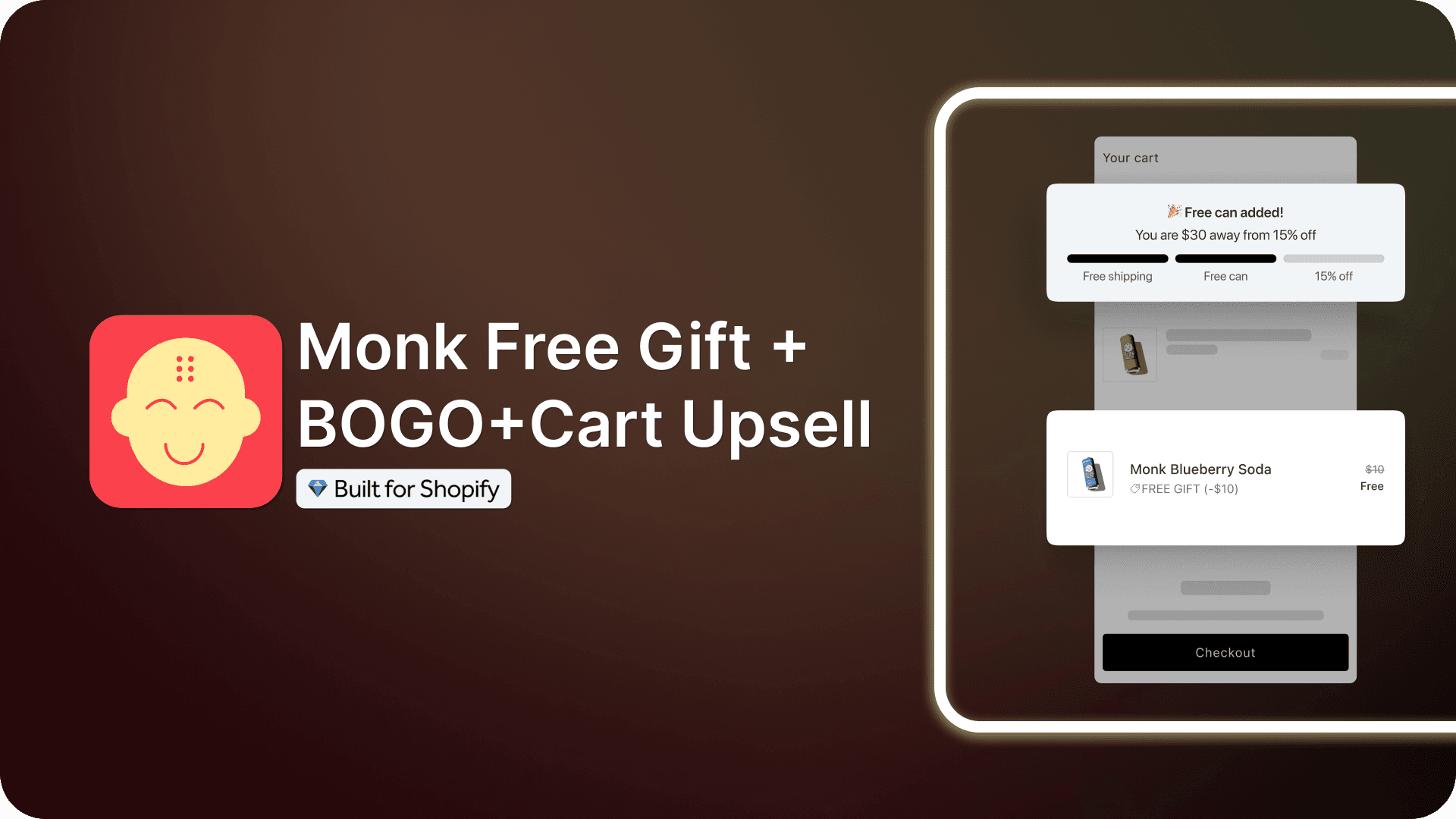
Instead of manually implementing upsells, bundles, cart incentives, and post-purchase offers separately, many Shopify brands use Monk to manage them from one dashboard.

This makes it easier to:
Maintain consistent design
Test different offers
Optimize timing and placement
Track what actually increases AOV
The goal is not to overwhelm customers with more offers. It’s to present the right incentive at the right stage of the buying journey.
Common Mistakes to Avoid When Increasing AOV
Increasing AOV is not just about adding more offers. If done poorly, it can reduce trust and hurt conversions. Here are common mistakes to avoid.
1. Pushing Irrelevant Upsells
Upsells that don’t match what the customer wants feel forced. Instead of increasing value, they create friction.
Keep upsells closely related to the product being viewed. Use browsing and purchase data to keep suggestions relevant and useful.
2. Giving customers way too many choices
Too many pop-ups, add-ons, and suggestions can overwhelm shoppers. When customers feel confused or pressured, they are more likely to leave.
Focus on a few strong recommendations and keep the layout clean and simple.
3. Setting Free Shipping Thresholds Too High
If the free shipping goal feels unreachable, customers won’t try to meet it. They may abandon the cart instead.
Set the threshold slightly above your current AOV and show clear progress toward free shipping to make it feel achievable.
4. Relying too much on Discounts
Frequent discounts can reduce perceived value and train customers to wait for sales. While discounts may increase AOV short term, they can hurt margins long term.
Prioritize value-based strategies like bundles or upgrades instead of constant price cuts.
5. Ignoring the Mobile Shopping Experience
A poor mobile experience can limit AOV growth. Slow pages, crowded layouts, and hard-to-click buttons reduce the effectiveness of upsells and add-ons.
Optimize mobile layouts and reduce distractions to keep the buying process smooth.
6. Making it harder to check out
A complex checkout can undo all your AOV efforts. Extra steps, hidden fees, or forced account creation increase abandonment.
Keep checkout simple, transparent, and fast. Offer guest checkout and show clear pricing.
7. Not Testing or Measuring Results
Without proper tracking, you won’t know which strategies are actually working.
Use A/B testing and monitor both AOV and conversion rates to improve performance based on data, not assumptions.
Conclusion
The objective of increasing the average order value is not to encourage consumers to spend more; rather, it is to provide them with additional value at the appropriate time. It is normal for AOV to go up when upsells, cross-sells, bundles, and incentives are in line with what the customer really wants.
AOV strategies that work best rely on trust, relevance, and ease of use. By consistently testing, optimizing each stage of the customer journey and avoiding common errors, businesses can increase revenue without compromising customer satisfaction or conversions. With time, these small, well-planned changes add up to long-term growth.
Frequently Asked Questions
What is a good average order value for e-commerce?
There’s no universal “good” value for AOV; it depends on your product prices and margins.
A good AOV is simply one that:
Covers your customer acquisition cost
Leaves you with healthy profit
Supports sustainable growth
Instead of chasing a specific benchmark, focus on improving your own AOV over time based on your previous data while keeping your store profitable.
How do upselling and cross-selling increase AOV?
Cross-selling adds things that go well with the primary item to the same order, while upselling encourages buyers to buy a better and more expensive version of the primary item.
Both tactics work by raising the total value of the cart without needing to get more customers. When done right, they also make the overall purchasing experience better.
What is the best free strategy to increase AOV?
There isn’t one single “best” strategy to increase AOV. What works depends on your products, pricing, and customers.
In most cases, product bundling, cross-selling, and free shipping thresholds tend to work well. But instead of relying on just one method, a smart combination of these strategies usually delivers better results.
The key is to test what fits your store and refine it over time.
What is the difference between AOV and LTV?
Both AOV and LTV are metrics measuring revenue, but in different ways.
Average order value measures the average amount of money a customer spends on each transaction.
Whereas, the lifetime value measures how much a customer spends over their entire relationship with your brand
AOV is all about getting people to spend more on each purchase, while LTV is all about building long-term relationships with customers. For long-term growth, both measures are important.
Can AOV increase without lowering prices or adding discounts?
Yes, value-based initiatives like upselling, cross-selling, personalization, bundles, and better checkout experiences can raise AOV.
These methods focus on making things more relevant and convenient instead of lowering prices. This lets businesses make more money while keeping their profit margins.
Is bundling more effective than discounting?
Bundling is generally better than discounting since it makes people think the products are worth more without lowering the pricing of each item.
Heavy discounting can train customers to wait for sales and may hurt margins over time. Bundling, on the other hand, feels like added value rather than a price cut.
That said, the best approach depends on your product type, margins, and audience, but for long-term profitability, bundling is usually the smarter strategy.
How to Increase Average Order Value in E-commerce
Summary
Average Order Value (AOV) measures how much a customer spends per order and is a key driver of ecommerce profitability. It is calculated by dividing total revenue by number of orders. Increasing AOV improves revenue without needing more traffic or ad spend. Common strategies include upselling higher value products, cross-selling related items, bundling, volume discounts, free shipping thresholds, loyalty rewards, personalization, and checkout optimization. The goal is to increase cart value while keeping the experience simple, relevant, and friction free. Success depends on testing, relevance of offers, and avoiding overloading customers or harming trust.
If you’re running an ecommerce store, getting traffic is only half the battle. The real growth often comes from something much simpler: increasing how much each customer spends per order.
Average Order Value (AOV) is one of the most underrated levers in e-commerce. You don’t need more ad budget. You don’t need more visitors. You don’t need to make each purchase slightly bigger, in a way that feels helpful and not pushy.
Think about it: when a customer is already in buying mode, they’re more open to adding one more item, upgrading to a better version, or unlocking a small reward. The key is creating offers that genuinely make sense for them.
In this guide, we’ll break down practical, proven strategies to increase your average order value in e-commerce without hurting the customer experience. Whether you’re a growing brand or scaling aggressively, these tactics can help you grow revenue more efficiently and sustainably.
What Is Average Order Value (AOV)?
Average Order Value (AOV) is a core metric that shows the average amount of money a customer spends each time they place an order on your store.
In simple terms,
On average, how much does one customer spend per purchase?
How to calculate AOV
AOV = Total revenue ÷ Number of orders
For example,
If your Shopify store made $10,000 from 200 orders, then your AOV is $50.
Why does AOV matter in e-commerce?
AOV helps you understand:
How valuable each transaction is
How efficient your marketing spend is
Whether upsells, bundles, and pricing strategies are working
Increasing AOV helps you:
Increase revenue without increasing traffic
Improve profitability from paid ads
Maximize customer value
Scale faster without higher acquisition costs
Instead of focusing only on getting more customers, AOV focuses on getting more value from each transaction, which is often easier and more cost-effective.
A “good” AOV is always relative to:
Your product prices
Your margins
Your customer acquisition cost (CAC)
Meaning, a $40 AOV can be amazing for one store and terrible for another.
Note:
Increasing AOV is powerful, but it should not be your first priority if
The conversion rate is low
Traffic is poorly targeted
Profit margins are thin
AOV works best when your store foundation is strong.
Strategies to Increase Average Order Value
Shopify gives you access to powerful features and apps that make it easier to apply proven AOV-boosting strategies like upsells, cross-sells, bundles, and personalized offers along with Free Gift with Purchase.
Below are practical ways to improve AOV without hurting the shopping experience.
1. Use Effective Upselling Techniques
Upselling is useful, as it lets customers choose a higher-value version of a product they are already considering. Make sure to use banners in the cart and the product page to clearly showcase the offer to the customers.
Tips:
Show the price differences clearly to explain the upgrade.
Use "Best Value" tags or comparison tables.
2. Implement Smart Cross-Selling
Cross-selling is highly effective when the product suggestions complement the main purchase.
Tips:
Show cross-sells on both the product and cart pages.
Use the "Frequently Bought Together" suggestions.
Keep recommendations closely related.
3. Offer Product Bundles and Kits
Bundles combine related items into one offer, increasing perceived value and simplifying buying decisions.
Tips:
Offer both fixed and flexible bundles
Clearly indicate the savings achieved by purchasing in bulk.
Show bundles on category and product pages.
4. Introduce Volume Discounts
Volume-based or tiered pricing motivates customers to buy more in one transaction, which raises AOV without the need for extra advertising.
Tips:
Use different prices for different levels (for example, Buy 2 Get 20% off, Buy 4 Get 30% off).
Show discount messages directly on product pages.
Add more savings to the cart summary.
5. Use Free Shipping Thresholds
Customers often hesitate to complete a purchase due to shipping costs. Set a minimum purchase threshold for free shipping to encourage them to add more to their cart.
Tips:
Set the threshold 10–20% above your current AOV
Show progress bars with clear messaging (“$12 away from free shipping ”)
Promote the threshold site-wide for visibility.
6. Implement Loyalty and Rewards Programs
Loyalty programs encourage customers to spend more per order. When shoppers see rewards tied to spending, they’re more likely to increase their cart value. This also helps create a long-term relationship with the customers.
Tips:
Give bonus points for higher cart values.
Give members-exclusive benefits that are only for them
Clearly show point earnings before checkout
7. Add Time-Sensitive & Limited Offers
Urgency reduces hesitation and increases purchase size when used strategically.
Tips:
Use countdown timers for important deals
Show notifications for low stock
Avoid overusing urgency to maintain credibility
8. Offer Subscriptions for Recurring Purchases
Subscriptions increase long-term order value and provide predictable revenue.
Tips:
Give a discount for signing up
Make it easy and clear to cancel
Let clients change how often they get deliveries.
9. Improve Product Page Personalization
Personalized recommendations help customers discover relevant products faster, increasing engagement and AOV naturally.
Tips:
Use your browsing and buying history
Show tailored recommendations that change over time
Try out different places for customization.
10. Optimize Your Checkout Experience
A streamlined checkout supports higher-value purchases and reduces friction.
Tips:
Add simple one-click order bumps
Reduce the number of checkout steps
Eliminate unexpected fees or surprises
How to implement AOV increasing strategies efficiently?
It is quite important to know the correct AOV techniques. But executing them consistently without slowing down your store or complicating the customer journey is where most merchants struggle.
Upsells need proper placement. Bundles need a clear savings display. Free shipping thresholds require dynamic progress tracking. Post-purchase offers must appear at the right moment.
Using multiple apps or custom code can create:
Design inconsistencies
Slow loading speeds
Offers that trigger incorrectly
A cluttered user experience
Instead of manually implementing upsells, bundles, cart incentives, and post-purchase offers separately, many Shopify brands use Monk to manage them from one dashboard.
This makes it easier to:
Maintain consistent design
Test different offers
Optimize timing and placement
Track what actually increases AOV
The goal is not to overwhelm customers with more offers. It’s to present the right incentive at the right stage of the buying journey.
Common Mistakes to Avoid When Increasing AOV
Increasing AOV is not just about adding more offers. If done poorly, it can reduce trust and hurt conversions. Here are common mistakes to avoid.
1. Pushing Irrelevant Upsells
Upsells that don’t match what the customer wants feel forced. Instead of increasing value, they create friction.
Keep upsells closely related to the product being viewed. Use browsing and purchase data to keep suggestions relevant and useful.
2. Giving customers way too many choices
Too many pop-ups, add-ons, and suggestions can overwhelm shoppers. When customers feel confused or pressured, they are more likely to leave.
Focus on a few strong recommendations and keep the layout clean and simple.
3. Setting Free Shipping Thresholds Too High
If the free shipping goal feels unreachable, customers won’t try to meet it. They may abandon the cart instead.
Set the threshold slightly above your current AOV and show clear progress toward free shipping to make it feel achievable.
4. Relying too much on Discounts
Frequent discounts can reduce perceived value and train customers to wait for sales. While discounts may increase AOV short term, they can hurt margins long term.
Prioritize value-based strategies like bundles or upgrades instead of constant price cuts.
5. Ignoring the Mobile Shopping Experience
A poor mobile experience can limit AOV growth. Slow pages, crowded layouts, and hard-to-click buttons reduce the effectiveness of upsells and add-ons.
Optimize mobile layouts and reduce distractions to keep the buying process smooth.
6. Making it harder to check out
A complex checkout can undo all your AOV efforts. Extra steps, hidden fees, or forced account creation increase abandonment.
Keep checkout simple, transparent, and fast. Offer guest checkout and show clear pricing.
7. Not Testing or Measuring Results
Without proper tracking, you won’t know which strategies are actually working.
Use A/B testing and monitor both AOV and conversion rates to improve performance based on data, not assumptions.
Conclusion
The objective of increasing the average order value is not to encourage consumers to spend more; rather, it is to provide them with additional value at the appropriate time. It is normal for AOV to go up when upsells, cross-sells, bundles, and incentives are in line with what the customer really wants.
AOV strategies that work best rely on trust, relevance, and ease of use. By consistently testing, optimizing each stage of the customer journey and avoiding common errors, businesses can increase revenue without compromising customer satisfaction or conversions. With time, these small, well-planned changes add up to long-term growth.
Frequently Asked Questions
What is a good average order value for e-commerce?
There’s no universal “good” value for AOV; it depends on your product prices and margins.
A good AOV is simply one that:
Covers your customer acquisition cost
Leaves you with healthy profit
Supports sustainable growth
Instead of chasing a specific benchmark, focus on improving your own AOV over time based on your previous data while keeping your store profitable.
How do upselling and cross-selling increase AOV?
Cross-selling adds things that go well with the primary item to the same order, while upselling encourages buyers to buy a better and more expensive version of the primary item.
Both tactics work by raising the total value of the cart without needing to get more customers. When done right, they also make the overall purchasing experience better.
What is the best free strategy to increase AOV?
There isn’t one single “best” strategy to increase AOV. What works depends on your products, pricing, and customers.
In most cases, product bundling, cross-selling, and free shipping thresholds tend to work well. But instead of relying on just one method, a smart combination of these strategies usually delivers better results.
The key is to test what fits your store and refine it over time.
What is the difference between AOV and LTV?
Both AOV and LTV are metrics measuring revenue, but in different ways.
Average order value measures the average amount of money a customer spends on each transaction.
Whereas, the lifetime value measures how much a customer spends over their entire relationship with your brand
AOV is all about getting people to spend more on each purchase, while LTV is all about building long-term relationships with customers. For long-term growth, both measures are important.
Can AOV increase without lowering prices or adding discounts?
Yes, value-based initiatives like upselling, cross-selling, personalization, bundles, and better checkout experiences can raise AOV.
These methods focus on making things more relevant and convenient instead of lowering prices. This lets businesses make more money while keeping their profit margins.
Is bundling more effective than discounting?
Bundling is generally better than discounting since it makes people think the products are worth more without lowering the pricing of each item.
Heavy discounting can train customers to wait for sales and may hurt margins over time. Bundling, on the other hand, feels like added value rather than a price cut.
That said, the best approach depends on your product type, margins, and audience, but for long-term profitability, bundling is usually the smarter strategy.
Ravish (RV)
Co-Founder, Monk Commerce
Ravish is an ecommerce and SaaS marketing expert with 6+ years of experience in Shopify and ecommerce and 10+ years of experience in marketing, and growth strategy. He has worked closely with Shopify merchants to solve real ecommerce challenges and shares practical, research-backed insights, industry best practices, and emerging trends.
Contents
Related Articles
Top 10 Shopify Apps to Raise Average Order Value
How to Increase AOV at Checkout on Shopify
10 Best Upsell Apps for Shopify to Boost Sales & AOV in 2026
Get Monk Free Gift app for just $1/month this Black Friday
First month: $1 after your 7-day free trial. All features included. Offer live!
Claim offer now

Get Monk Free Gift app for just $1/month this Black Friday
First month: $1 after your 7-day free trial. All features included. Offer live!
Claim offer now
Get Monk Free Gift app for just $1/month this Black Friday
First month: $1 after your 7-day free trial. All features included. Offer live!
Claim offer now