Shopify Bundle Offer Examples to Increase AOV in 2026
Summary
Discover 13 proven Shopify bundle offer examples to boost AOV and drive more sales, from fixed bundles and mix-and-match to BOGO deals, volume discounts, and free gift with purchase (FGWP). Learn how cart bundles, checkout upsells, and post-purchase offers fit into a complete Shopify bundle funnel, plus how to choose the right bundle strategy based on your store's traffic, inventory, and AOV goals. Includes best practices for pricing, margins, and bundle visibility, common mistakes to avoid, and how Monk Free Gift helps Shopify merchants create high-converting bundle, upsell, and free gift offers.

Ravish (RV)
Senior Content Writer
Ravish is an ecommerce and SaaS marketing expert with 6+ years of experience in Shopify and ecommerce and 10+ years of experience in marketing, and growth strategy. He has worked closely with Shopify merchants to solve real ecommerce challenges and shares practical, research-backed insights, industry best practices, and emerging trends.
Key Takeaways
Discover 13 proven Shopify bundle offer examples to boost AOV and drive more sales, from fixed bundles and mix-and-match to BOGO deals, volume discounts, and free gift with purchase (FGWP). Learn how cart bundles, checkout upsells, and post-purchase offers fit into a complete Shopify bundle funnel, plus how to choose the right bundle strategy based on your store's traffic, inventory, and AOV goals. Includes best practices for pricing, margins, and bundle visibility, common mistakes to avoid, and how Monk Free Gift helps Shopify merchants create high-converting bundle, upsell, and free gift offers.
A good bundle can increase average order value, improve conversions, clear slow-moving inventory, and make shopping feel easier for customers. Every major e-commerce brand uses some form of bundling, whether it’s a simple “Frequently Bought Together” section, a mix-and-match bundle, or a free gift offer in Shopify at checkout.
But not all bundle strategies work the same way. Some are built to increase cart size immediately. Others are designed to improve product discovery, reduce decision fatigue, or encourage repeat purchases. Using the wrong bundle type can affect margins, confuse customers, or make the shopping experience feel cluttered.
This guide breaks down the most important Shopify bundle offer types, how they work, where they perform best, and what store owners should know before using them.
What Are Shopify Bundle Offers?
Shopify bundle offers motivate customers to buy multiple products instead of one. For example, a customer planning to buy a moisturizer is highly likely to add a serum to the cart if there is a pop-up like “Add a serum at 15 percent off.” Now the order becomes a ‘bundle.’
There are various strategies for curating these bundles (discussed later). The products can be packaged as a predefined set; the customers can even build their own bundle in other cases. The offers can also appear as a free gift, BOGO deal, or quantity discount.
The ultimate goal of all bundles is to get customers to add more items to their order by making the offer feel useful or valuable.
Benefits of Bundle Offers for Shopify Stores
Bundle offers are one of the easiest ways to increase order value without bringing in more traffic. They help customers discover related products, make buying decisions easier, and often give shoppers a reason to add one more item to the cart. Bundles can also help move slow-selling inventory, support seasonal Shopify bundle promotions, promote new products, and increase the number of products sold per order. When the products naturally belong together, bundles feel less like a promotion and more like a helpful recommendation.
15 Best Shopify Bundle Offer Examples
Core Bundle Types:
Fixed Bundles
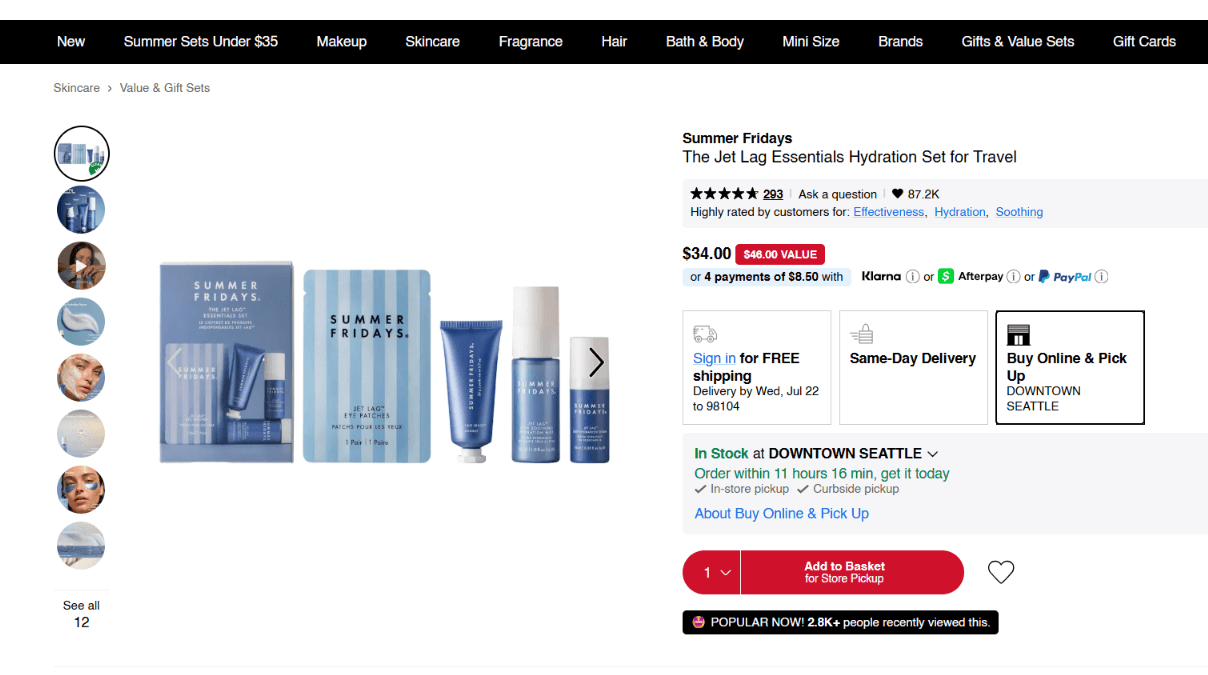
Fixed bundles are pre-built product bundles where the customer buys a predefined set of items together. Unlike mix-and-match bundles, the customer cannot choose individual products within the bundle.
These bundles are commonly used to group complementary products together and offer better value compared to buying items separately. Fixed bundles simplify purchasing, increase average order value, and help stores promote related products together.
Examples
|
Mix and Match Bundles (Build Your Own)
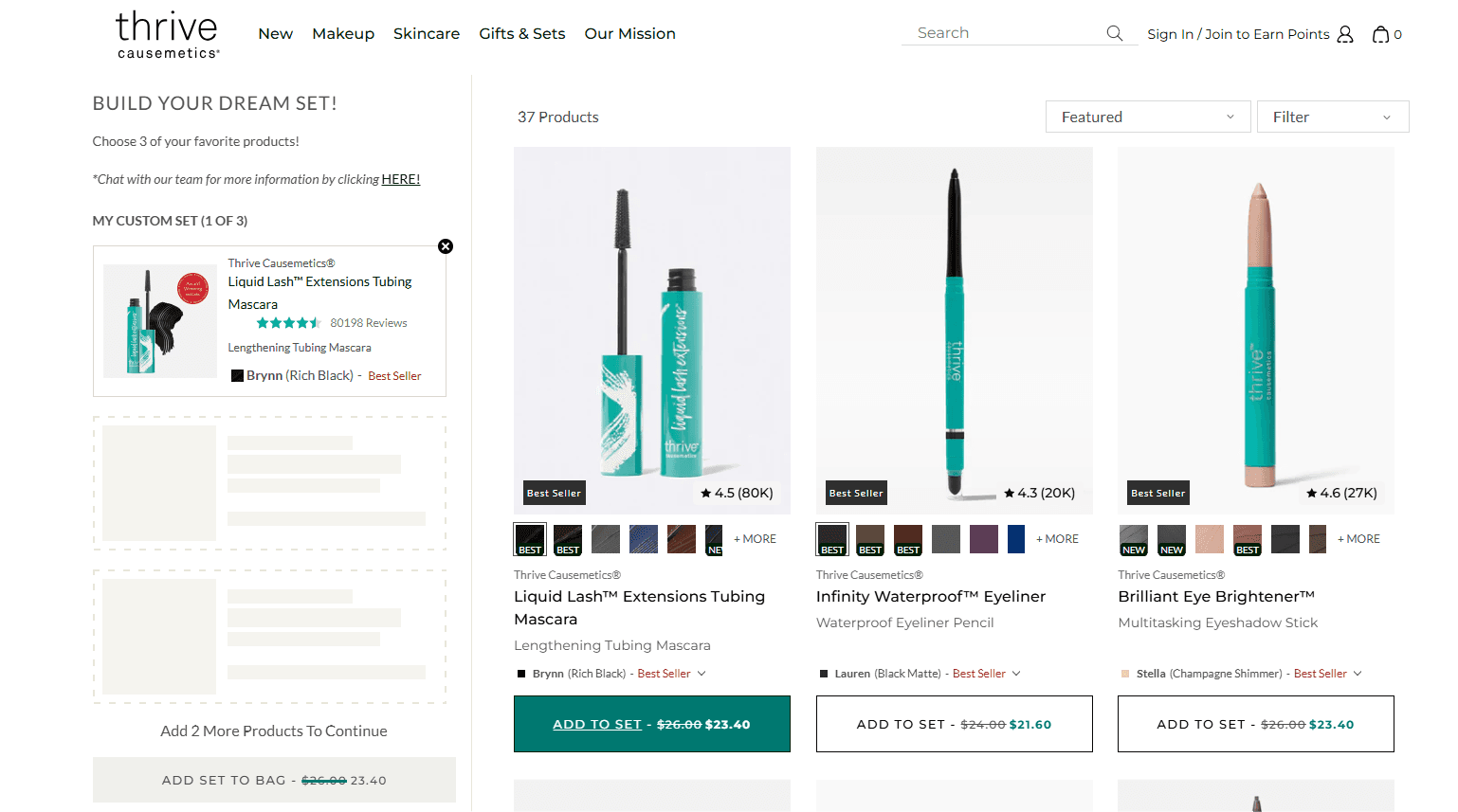
Mix and Match bundles are the most engaging way to build bundles on Shopify. Imagine walking into a store and picking your favorite sweets to build your box. The freedom of picking your own products from a predefined range makes the process fun, personal, and entirely built around the customer’s taste. While traditional (fixed) bundles are static, mix-and-match bundles are flexible. The customer chooses from a specific collection and builds the bundle themselves.
Mix and match bundles increase the average order value without forcing the customer to choose a specific item. The customers feel empowered with the personalized experience, and the store owners can make customers happier while also clearing out the slow-moving inventory.
Examples
|
Buy X Get Y Bundles
Buy X Get Y bundles reward customers with a free or discounted product when they purchase a specific item or quantity. These offers are widely used to increase conversions, boost average order value, and move slow-selling inventory.
Unlike fixed bundles, the discount is triggered only when the customer adds the required products to the cart. The reward can be a free item, a discounted product, or an additional quantity of the same product.
Buy X Get Y offers work well for product promotions, seasonal campaigns, and encouraging larger purchases without directly reducing the price of the main product.
Examples
|
Volume Bundles (Buy More, Save More Offers)
Volume bundles offer discounts based on the quantity purchased. The more products customers buy, the more they save. These bundles are commonly used to increase average order value and encourage bulk purchases.
Unlike fixed bundles, volume bundles focus on quantity-based pricing. The discount is automatically applied when customers reach a specific purchase threshold.
These offers work especially well for consumable, repeat-purchase, and everyday products where customers are likely to stock up.

Examples
|
Merchandising-led Bundles
Cross-sell Bundles
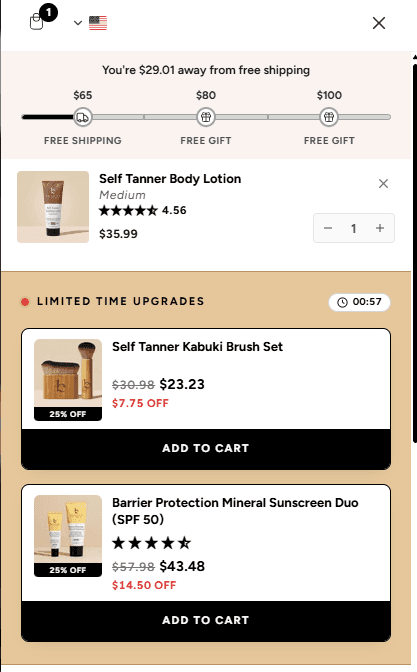
Cross-sell bundles encourage customers to add related or complementary products alongside their main purchase. These offers are usually shown on the product page, cart page, or checkout as optional add-ons to increase cart value.
They work especially well for products with accessories, refill items, upgrades, or supporting products.
Examples
|
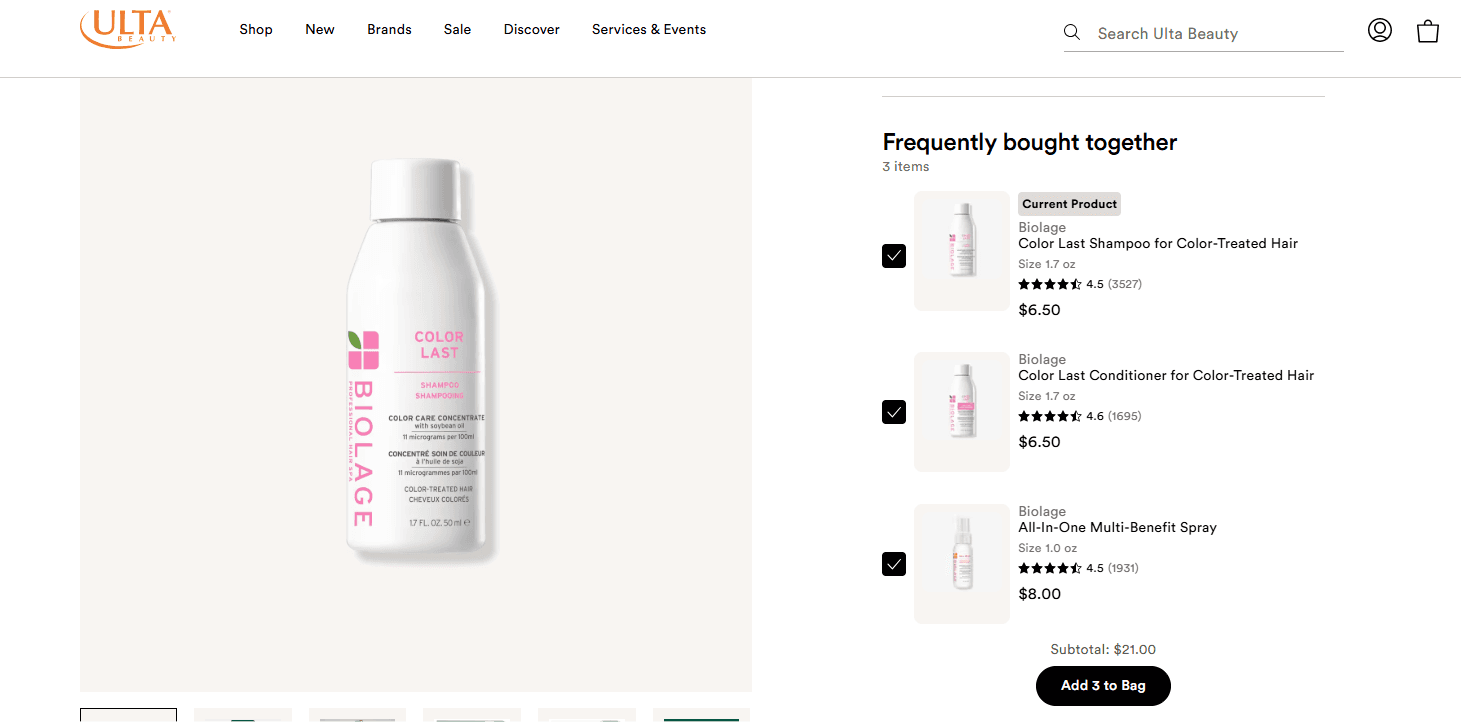
Frequently Bought Together Bundles
Frequently Bought Together bundles recommend products that customers commonly purchase together. These suggestions are usually based on customer purchase behavior and are shown on product pages, cart pages, or checkout sections.
Unlike fixed bundles, the products are suggested dynamically and customers can choose whether to add them to the cart.
This bundling strategy works especially well for complementary products, accessories, refill items, and routine purchases.
Examples
|
Product Add-on Bundles
Product add-on bundles offer optional extra products that customers can add alongside the main product purchase. These add-ons are usually shown on the product page before checkout to increase cart value with minimal friction.
Unlike cross-sell bundles, add-on bundles are typically tied directly to a specific product and focus on quick accessory or upgrade purchases.
They work especially well for accessories, protection plans, customization options, refill products, and premium upgrades.

Examples
|
Advanced Bundles
Virtual Bundles
Virtual bundles combine multiple individual products into a single bundle offer without creating a separate physical bundle inventory or pre-packed product.
When a customer purchases the bundle, the inventory of each product inside the bundle is automatically deducted from its existing stock. The bundle is managed virtually through bundle or inventory management software while the products continue to exist as separate inventory items.
This bundling method works well for stores that want flexible bundle creation without manually repackaging products or maintaining separate bundle stock.
Examples
|
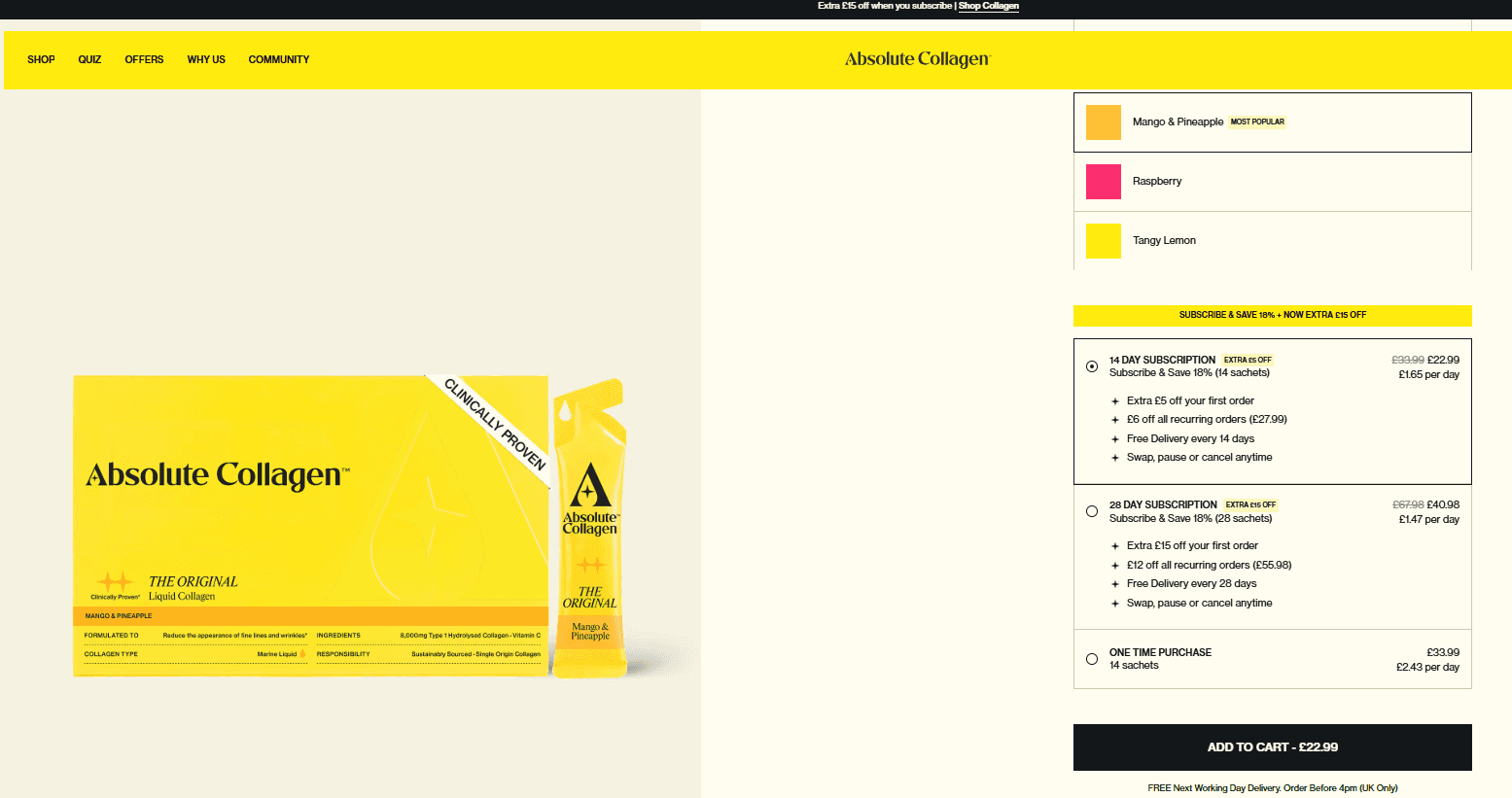
Subscription Bundles
The customer receives a subscription bundle at fixed repeated intervals (weekly, biweekly, monthly, etc). It is not a one-time purchase. These bundles usually contain curated products that are consumable, routine-based, or refillable.
Examples
|
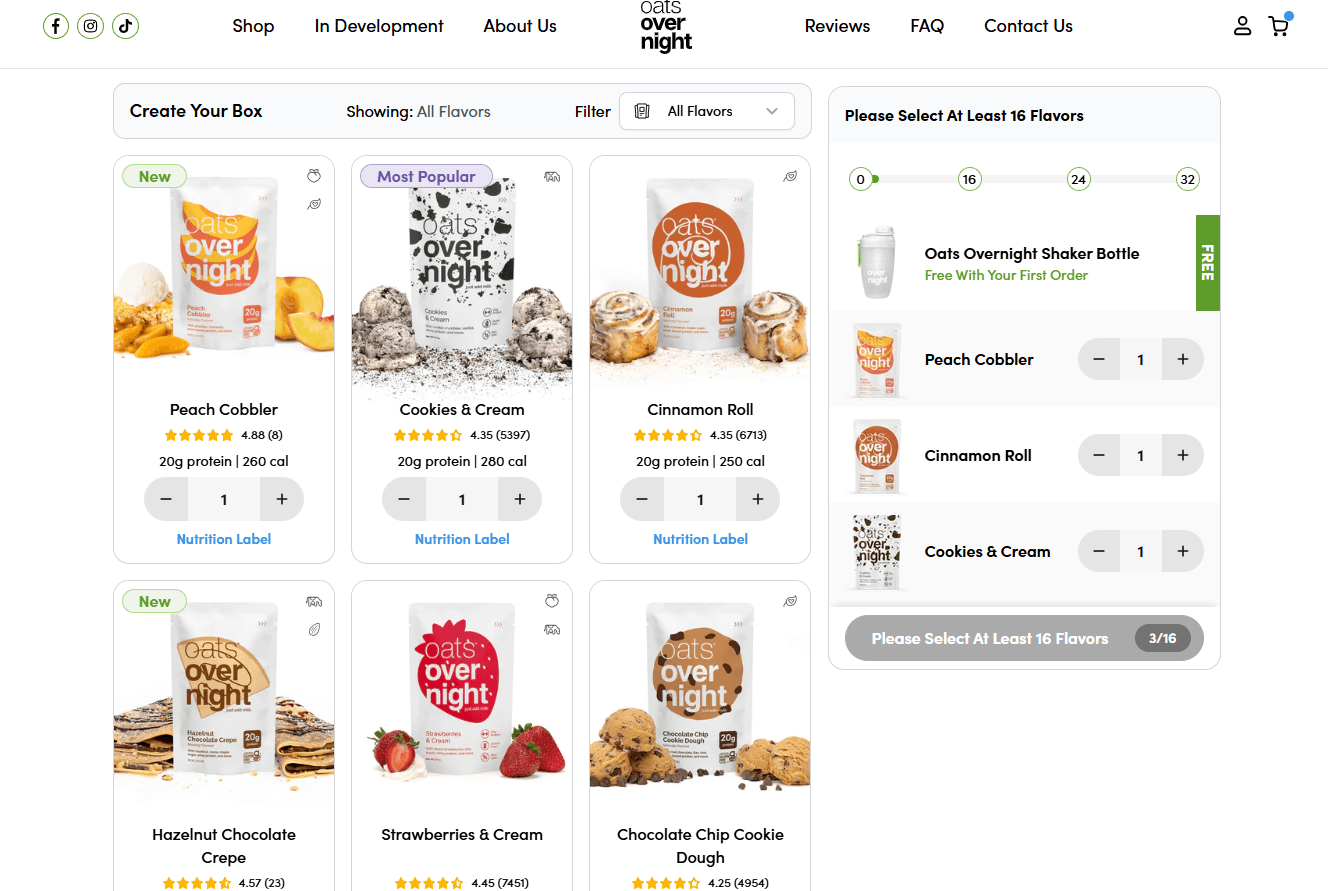
Dynamic Bundles
Dynamic bundles are advanced, customizable bundles where the products, quantities, pricing, and recommendations update in real time. Customers can tailor their products, select quantities, add upgrades, or unlock recommendations, and the total bundle price updates automatically.
These bundles are commonly used for build-your-own-box experiences, personalized product kits, and configurable product setups.
Examples
|
Placement-based Bundles
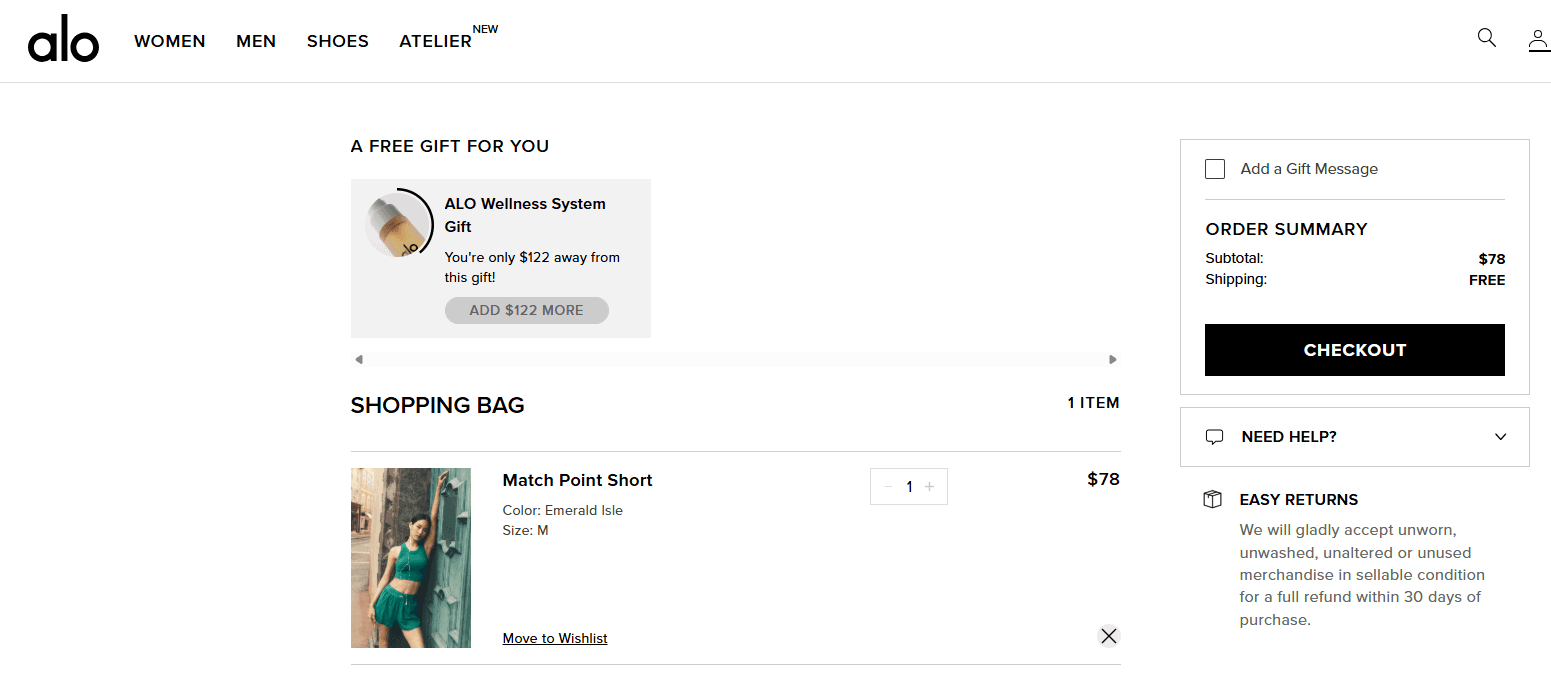
Cart Bundles
Cart bundles are bundle offers shown directly in the cart or cart drawer before checkout. Instead of showing bundles on the product page, these offers appear when customers are already ready to buy.
They are mainly used to increase cart value with last-minute add-ons, discounts, free gifts, or complementary product suggestions.
You’ll often see these offers triggered based on what’s already in the cart.
Examples
|
Learn How to Add Cart Progress Bars on Shopify
Checkout Bundles (Shopify Checkout Upsell Examples)
Checkout bundles are bundle offers shown during the checkout process, just before the customer completes the purchase. These bundles are commonly used to increase order value with last-minute upsells and add-on offers.
Since Shopify limits checkout customization, checkout bundles are usually available only for Shopify Plus stores or apps using Shopify’s checkout extensibility features.
These offers work best for small add-ons, impulse purchases, protection plans, and complementary products that customers can quickly add before payment.
Examples
|
Post-Purchase Bundles
Post-purchase bundles are offers shown after the customer completes checkout but before reaching the thank-you page. Customers can quickly add extra products to their order without re-entering payment or shipping details.
These bundles work well because the customer has already committed to buying, making them more likely to accept a small, relevant add-on. They are commonly used for impulse purchases, upgrades, refill products, and complementary items.
Examples
|
Promotional bundle variants
Discounted bundles (Shopify bundle discount examples)
Discounted bundles are one of the most common Shopify bundle deals because they combine multiple products and offer them at a lower price than buying each item separately. The highlighted discount prompts the customer to buy more products. They are commonly used to increase average order value, promote complementary products, and move inventory faster.
Examples
|
Gift Bundles (Free Gift With Purchase/FGWP)
Gift bundles include a free product when customers purchase specific products or reach a minimum cart value. Customers feel satisfied when they get extra value without directly paying more. Stores commonly use them to increase cart value, promote new products, or encourage larger purchases.
Examples
|
How Monk Helps Create High-Converting Bundle Offers
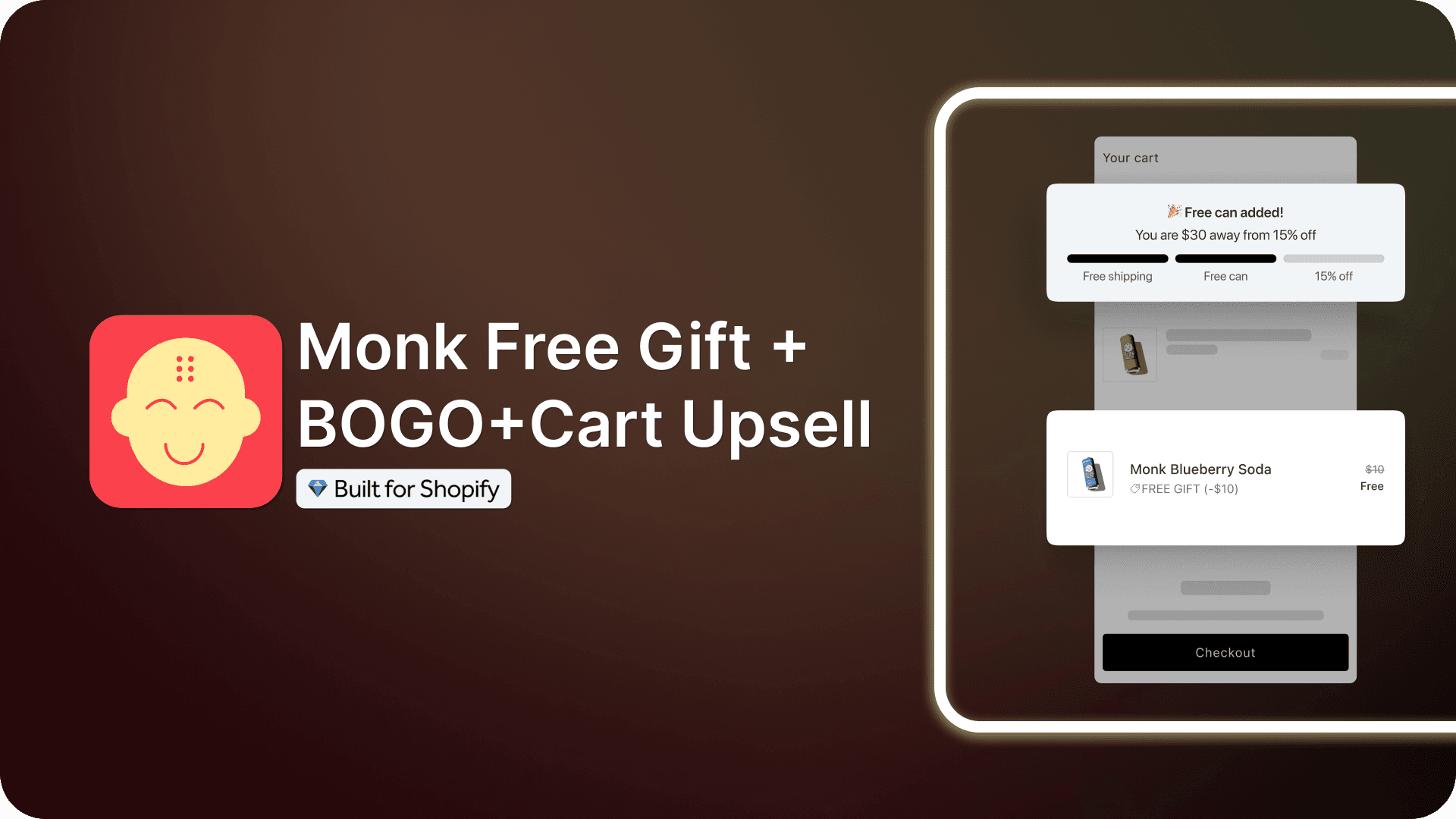
Monk Free Gift is one of the most popular Shopify bundle app examples for creating cart bundles, BOGO offers, free gifts, frequently bought together suggestions, and post-purchase offers. This allows merchants to build simple Shopify bundle funnel examples that start on the product page and continue through the cart, checkout, and post-purchase stages.

For example:
Spend $50 more to unlock a free gift
Add 1 more product to get bundle pricing
Complete the set and save 15%
Customers clearly understand the value they’re getting before they buy more.
How to Choose the Right Bundle Strategy for Your Shopify Store
Most Shopify stores don’t fail at bundling because the app is bad. They fail because they pick the wrong bundle for the problem they face.
If your store already converts well but customers only buy one item, your strategy should look very different from a store struggling with dead inventory or product overload.
The smartest way to approach bundling is to start with the friction point first, and then choose the bundle type that solves it.
If your traffic is high but AOV is low
This usually means customers like the product, but they’re only buying the minimum.
In this case, simple add-on bundles usually work best:
Frequently bought together bundles
Cart bundles
Small fixed bundles
Example:
A customer buying a camera might also add:
Memory card
Tripod
Camera bag
Note: These bundles usually work best near the Add to Cart button or inside the cart drawer while the buying intent is still high.
If you have slow-moving inventory
This is where BOGO offers and free gift bundles usually perform well. Instead of heavily discounting the main product, stores use the bestselling item to help move slower inventory.
Example:
Buy a gaming keyboard, get a mouse pad free
Buy skincare serum, get a mini cleanser free
Note: This strategy works especially well when the free item feels useful instead of random. However, a free gift that destroys profitability isn’t really helping the business, so always check the margin.
If customers feel overwhelmed by too many products
Large catalogs can hurt conversions when shoppers don’t know what works together.
That’s why curated bundles often outperform standalone products in categories like:
Skincare
Supplements
Coffee
Fitness
Electronics
Instead of forcing customers to figure everything out themselves, the store creates ready-made solutions.
Examples:
Beginner Home Gym Kit
Morning Coffee Starter Pack
Travel Skincare Routine
These bundles reduce decision fatigue and make buying easier.
The best bundle strategy usually depends on how customers buy in your category. Impulse-purchase products often perform well with quantity breaks, BOGO offers, and cart bundles. Higher-consideration purchases usually benefit more from starter kits, curated bundles, and frequently bought together offers.
Note: The goal isn't to use every bundle type, it's to choose the one that matches the buying behavior of your customers.
Best Practices for Shopify Bundle Offers
Start simple before going dynamic
A lot of stores install a bundle app and immediately launch mix-and-match bundles, BOGO offers, cart upsells, post-purchase offers, and quantity breaks all at once. When performance changes, they have no idea which offer is actually driving results.
A better approach is to start with one bundle type on one bestselling product, measure the results, and then expand from there.
Bundle products that naturally belong together
Strong bundles usually solve one complete need. That's why skincare routines, coffee kits, gaming setups, and fitness starter packs often outperform random product combinations.
Customers should immediately understand why the products belong together. If the bundle feels like a collection of leftover inventory, most shoppers will ignore it.
Keep the experience simple
The best bundles feel effortless. Customers should instantly understand:
What's included
What they save
Why the products belong together
This becomes especially important with mix-and-match and dynamic bundles. Too many options, variants, or configuration steps can create friction and reduce conversions.
Make the savings obvious
Don't force customers to calculate the value themselves. Messages like:
Save $20
Buy 3 for $40
Free gift included
usually perform better than simply displaying a discounted price.
Don't ignore margins
A bundle that increases sales but destroys profitability is still a bad bundle.
Before launching any offer, consider:
Product costs
Shipping costs
Packaging costs
Discount impact
Fulfillment complexity
This is particularly important for free gift offers, volume discounts, and low-margin products.
Track the right metrics
Conversion rate only tells part of the story. To understand whether a bundle is actually working, monitor the following:
Average Order Value (AOV)
Revenue Per Visitor (RPV)
Bundle Attach Rate
Checkout Completion Rate
Sometimes a bundle slightly lowers conversion rate but significantly increases revenue per order. In that case, the bundle may still be a success.
Common Mistakes to Avoid With Shopify Bundle Offers
Many Shopify stores focus too much on “adding products together” and not enough on whether the bundle actually feels useful to the customer. If the offer feels random, overpriced, or hard to understand, most shoppers will ignore it completely.
Bundling products that don’t belong together
A product bundle should not feel forced. Customers should immediately understand why the products are grouped. A phone case bundled with a screen protector makes sense, while a phone case bundled with a kitchen towel doesn’t.
The best bundles usually do one of three things:
complete a setup
solve a specific problem
make buying easier
If customers have to stop and think, the bundle probably isn’t working.
Weak discounts that don’t feel like real savings
Most customers expect a bundle deal to actually save them money. If the discount is too small, the customer may not be interested.
Example:
Individual products = $84
Bundle price = $82
This offer may not urge the buyer to try the bundle.
Clear offers work better:
Buy 3 for $40
Save 20%
Free product included
Customers should understand the value in two seconds or less.
Inventory problems that break the bundle
Bundles can often confuse the inventory available, especially when multiple products are tied together.
One product goes out of stock, and suddenly the entire bundle becomes unavailable. This gets even messier with:
virtual bundles
dynamic bundles
frequently bought together offers
That’s why many Shopify stores use inventory syncing or bundle apps to keep stock levels accurate across both individual products and bundles.
Poor bundle presentation
Some bundles fail simply because the offer is unclear. A weak offer looks like ‘Buy the bundle for $5”, while “A weekend travel kit” makes more sense to the buyer.
The customer should instantly understand:
what’s included
why the products belong together
what they save
Never testing the offer
A lot of merchants create one bundle and never touch it again. Making a few small changes can completely change performance:
swapping one product
changing the discount
moving the bundle from product page to cart drawer
changing the bundle title
Poor visibility across the store
The easier the bundle is to discover, the more likely customers are to add it. Some of the most effective Shopify bundle marketing examples feature bundle offers on product pages, in cart drawers, in email campaigns, and on seasonal landing pages.
Final Thoughts
Bundle offers work because they make buying easier. A customer comes to buy one product. A good bundle helps them discover related products, complete a setup, or save money by purchasing everything together. The result is usually higher AOV, better product discovery, and a better shopping experience.
The biggest mistake Shopify stores make is treating bundling as a discount strategy. The best bundles solve a problem, complete a routine, or remove a buying decision. That's why a simple skincare kit or frequently bought together offer often outperforms a larger discount on random products.
You don't need multiple bundle types running at once. Start with one offer on a product that already sells well. Track the results, check your margins, and improve from there.
The best bundle strategy is usually the simplest one: put the right products together, make the value obvious, and make it easy for customers to buy.
FAQs
How do Shopify bundle offers increase AOV?
Bundle offers on Shopify encourage customers to buy multiple products together instead of a single item, increasing the total order value.
What is the best Shopify bundle app?
The best app depends on the bundle type you need. Monk Free Gift is commonly used for cart bundles, free gifts, upsells, and post-purchase offers.
Can I create mix-and-match bundles on Shopify?
Yes. You can create mix-and-match bundles on Shopify using Shopify bundle apps that allow customers to choose products from a selected collection to build their own bundle.
How do BOGO offers work on Shopify?
BOGO offers reward customers with a free or discounted product after they purchase a required item or quantity.
What products work best for Shopify bundles?
Bundles work best for complementary, consumable, or frequently purchased products like skincare, snacks, supplements, apparel, and accessories.
Can bundle offers improve conversion rates?
Yes. Good bundle offers simplify buying decisions and increase perceived value, which can improve conversions.
How do I create bundle discounts in Shopify?
Bundle discounts can be created using Shopify discounts or apps that support fixed bundles, BOGO offers, quantity breaks, and free gifts.
What is the difference between upsells and bundles?
Bundles combine multiple products into one offer. Upsells encourage customers to add or upgrade products during the buying process.
Can Shopify bundles help reduce cart abandonment?
Yes. Cart bundles, free gifts, and checkout offers can increase perceived value and encourage customers to complete checkout.
Shopify Bundle Offer Examples to Increase AOV in 2026
Summary
Discover 13 proven Shopify bundle offer examples to boost AOV and drive more sales, from fixed bundles and mix-and-match to BOGO deals, volume discounts, and free gift with purchase (FGWP). Learn how cart bundles, checkout upsells, and post-purchase offers fit into a complete Shopify bundle funnel, plus how to choose the right bundle strategy based on your store's traffic, inventory, and AOV goals. Includes best practices for pricing, margins, and bundle visibility, common mistakes to avoid, and how Monk Free Gift helps Shopify merchants create high-converting bundle, upsell, and free gift offers.
A good bundle can increase average order value, improve conversions, clear slow-moving inventory, and make shopping feel easier for customers. Every major e-commerce brand uses some form of bundling, whether it’s a simple “Frequently Bought Together” section, a mix-and-match bundle, or a free gift offer in Shopify at checkout.
But not all bundle strategies work the same way. Some are built to increase cart size immediately. Others are designed to improve product discovery, reduce decision fatigue, or encourage repeat purchases. Using the wrong bundle type can affect margins, confuse customers, or make the shopping experience feel cluttered.
This guide breaks down the most important Shopify bundle offer types, how they work, where they perform best, and what store owners should know before using them.
What Are Shopify Bundle Offers?
Shopify bundle offers motivate customers to buy multiple products instead of one. For example, a customer planning to buy a moisturizer is highly likely to add a serum to the cart if there is a pop-up like “Add a serum at 15 percent off.” Now the order becomes a ‘bundle.’
There are various strategies for curating these bundles (discussed later). The products can be packaged as a predefined set; the customers can even build their own bundle in other cases. The offers can also appear as a free gift, BOGO deal, or quantity discount.
The ultimate goal of all bundles is to get customers to add more items to their order by making the offer feel useful or valuable.
Benefits of Bundle Offers for Shopify Stores
Bundle offers are one of the easiest ways to increase order value without bringing in more traffic. They help customers discover related products, make buying decisions easier, and often give shoppers a reason to add one more item to the cart. Bundles can also help move slow-selling inventory, support seasonal Shopify bundle promotions, promote new products, and increase the number of products sold per order. When the products naturally belong together, bundles feel less like a promotion and more like a helpful recommendation.
15 Best Shopify Bundle Offer Examples
Core Bundle Types:
Fixed Bundles
Fixed bundles are pre-built product bundles where the customer buys a predefined set of items together. Unlike mix-and-match bundles, the customer cannot choose individual products within the bundle.
These bundles are commonly used to group complementary products together and offer better value compared to buying items separately. Fixed bundles simplify purchasing, increase average order value, and help stores promote related products together.
Examples
|
Mix and Match Bundles (Build Your Own)
Mix and Match bundles are the most engaging way to build bundles on Shopify. Imagine walking into a store and picking your favorite sweets to build your box. The freedom of picking your own products from a predefined range makes the process fun, personal, and entirely built around the customer’s taste. While traditional (fixed) bundles are static, mix-and-match bundles are flexible. The customer chooses from a specific collection and builds the bundle themselves.
Mix and match bundles increase the average order value without forcing the customer to choose a specific item. The customers feel empowered with the personalized experience, and the store owners can make customers happier while also clearing out the slow-moving inventory.
Examples
|
Buy X Get Y Bundles
Buy X Get Y bundles reward customers with a free or discounted product when they purchase a specific item or quantity. These offers are widely used to increase conversions, boost average order value, and move slow-selling inventory.
Unlike fixed bundles, the discount is triggered only when the customer adds the required products to the cart. The reward can be a free item, a discounted product, or an additional quantity of the same product.
Buy X Get Y offers work well for product promotions, seasonal campaigns, and encouraging larger purchases without directly reducing the price of the main product.
Examples
|
Volume Bundles (Buy More, Save More Offers)
Volume bundles offer discounts based on the quantity purchased. The more products customers buy, the more they save. These bundles are commonly used to increase average order value and encourage bulk purchases.
Unlike fixed bundles, volume bundles focus on quantity-based pricing. The discount is automatically applied when customers reach a specific purchase threshold.
These offers work especially well for consumable, repeat-purchase, and everyday products where customers are likely to stock up.
Examples
|
Merchandising-led Bundles
Cross-sell Bundles
Cross-sell bundles encourage customers to add related or complementary products alongside their main purchase. These offers are usually shown on the product page, cart page, or checkout as optional add-ons to increase cart value.
They work especially well for products with accessories, refill items, upgrades, or supporting products.
Examples
|
Frequently Bought Together Bundles
Frequently Bought Together bundles recommend products that customers commonly purchase together. These suggestions are usually based on customer purchase behavior and are shown on product pages, cart pages, or checkout sections.
Unlike fixed bundles, the products are suggested dynamically and customers can choose whether to add them to the cart.
This bundling strategy works especially well for complementary products, accessories, refill items, and routine purchases.
Examples
|
Product Add-on Bundles
Product add-on bundles offer optional extra products that customers can add alongside the main product purchase. These add-ons are usually shown on the product page before checkout to increase cart value with minimal friction.
Unlike cross-sell bundles, add-on bundles are typically tied directly to a specific product and focus on quick accessory or upgrade purchases.
They work especially well for accessories, protection plans, customization options, refill products, and premium upgrades.
Examples
|
Advanced Bundles
Virtual Bundles
Virtual bundles combine multiple individual products into a single bundle offer without creating a separate physical bundle inventory or pre-packed product.
When a customer purchases the bundle, the inventory of each product inside the bundle is automatically deducted from its existing stock. The bundle is managed virtually through bundle or inventory management software while the products continue to exist as separate inventory items.
This bundling method works well for stores that want flexible bundle creation without manually repackaging products or maintaining separate bundle stock.
Examples
|
Subscription Bundles
The customer receives a subscription bundle at fixed repeated intervals (weekly, biweekly, monthly, etc). It is not a one-time purchase. These bundles usually contain curated products that are consumable, routine-based, or refillable.
Examples
|
Dynamic Bundles
Dynamic bundles are advanced, customizable bundles where the products, quantities, pricing, and recommendations update in real time. Customers can tailor their products, select quantities, add upgrades, or unlock recommendations, and the total bundle price updates automatically.
These bundles are commonly used for build-your-own-box experiences, personalized product kits, and configurable product setups.
Examples
|
Placement-based Bundles
Cart Bundles
Cart bundles are bundle offers shown directly in the cart or cart drawer before checkout. Instead of showing bundles on the product page, these offers appear when customers are already ready to buy.
They are mainly used to increase cart value with last-minute add-ons, discounts, free gifts, or complementary product suggestions.
You’ll often see these offers triggered based on what’s already in the cart.
Examples
|
Learn How to Add Cart Progress Bars on Shopify
Checkout Bundles (Shopify Checkout Upsell Examples)
Checkout bundles are bundle offers shown during the checkout process, just before the customer completes the purchase. These bundles are commonly used to increase order value with last-minute upsells and add-on offers.
Since Shopify limits checkout customization, checkout bundles are usually available only for Shopify Plus stores or apps using Shopify’s checkout extensibility features.
These offers work best for small add-ons, impulse purchases, protection plans, and complementary products that customers can quickly add before payment.
Examples
|
Post-Purchase Bundles
Post-purchase bundles are offers shown after the customer completes checkout but before reaching the thank-you page. Customers can quickly add extra products to their order without re-entering payment or shipping details.
These bundles work well because the customer has already committed to buying, making them more likely to accept a small, relevant add-on. They are commonly used for impulse purchases, upgrades, refill products, and complementary items.
Examples
|
Promotional bundle variants
Discounted bundles (Shopify bundle discount examples)
Discounted bundles are one of the most common Shopify bundle deals because they combine multiple products and offer them at a lower price than buying each item separately. The highlighted discount prompts the customer to buy more products. They are commonly used to increase average order value, promote complementary products, and move inventory faster.
Examples
|
Gift Bundles (Free Gift With Purchase/FGWP)
Gift bundles include a free product when customers purchase specific products or reach a minimum cart value. Customers feel satisfied when they get extra value without directly paying more. Stores commonly use them to increase cart value, promote new products, or encourage larger purchases.
Examples
|
How Monk Helps Create High-Converting Bundle Offers
Monk Free Gift is one of the most popular Shopify bundle app examples for creating cart bundles, BOGO offers, free gifts, frequently bought together suggestions, and post-purchase offers. This allows merchants to build simple Shopify bundle funnel examples that start on the product page and continue through the cart, checkout, and post-purchase stages.
For example:
Spend $50 more to unlock a free gift
Add 1 more product to get bundle pricing
Complete the set and save 15%
Customers clearly understand the value they’re getting before they buy more.
How to Choose the Right Bundle Strategy for Your Shopify Store
Most Shopify stores don’t fail at bundling because the app is bad. They fail because they pick the wrong bundle for the problem they face.
If your store already converts well but customers only buy one item, your strategy should look very different from a store struggling with dead inventory or product overload.
The smartest way to approach bundling is to start with the friction point first, and then choose the bundle type that solves it.
If your traffic is high but AOV is low
This usually means customers like the product, but they’re only buying the minimum.
In this case, simple add-on bundles usually work best:
Frequently bought together bundles
Cart bundles
Small fixed bundles
Example:
A customer buying a camera might also add:
Memory card
Tripod
Camera bag
Note: These bundles usually work best near the Add to Cart button or inside the cart drawer while the buying intent is still high.
If you have slow-moving inventory
This is where BOGO offers and free gift bundles usually perform well. Instead of heavily discounting the main product, stores use the bestselling item to help move slower inventory.
Example:
Buy a gaming keyboard, get a mouse pad free
Buy skincare serum, get a mini cleanser free
Note: This strategy works especially well when the free item feels useful instead of random. However, a free gift that destroys profitability isn’t really helping the business, so always check the margin.
If customers feel overwhelmed by too many products
Large catalogs can hurt conversions when shoppers don’t know what works together.
That’s why curated bundles often outperform standalone products in categories like:
Skincare
Supplements
Coffee
Fitness
Electronics
Instead of forcing customers to figure everything out themselves, the store creates ready-made solutions.
Examples:
Beginner Home Gym Kit
Morning Coffee Starter Pack
Travel Skincare Routine
These bundles reduce decision fatigue and make buying easier.
The best bundle strategy usually depends on how customers buy in your category. Impulse-purchase products often perform well with quantity breaks, BOGO offers, and cart bundles. Higher-consideration purchases usually benefit more from starter kits, curated bundles, and frequently bought together offers.
Note: The goal isn't to use every bundle type, it's to choose the one that matches the buying behavior of your customers.
Best Practices for Shopify Bundle Offers
Start simple before going dynamic
A lot of stores install a bundle app and immediately launch mix-and-match bundles, BOGO offers, cart upsells, post-purchase offers, and quantity breaks all at once. When performance changes, they have no idea which offer is actually driving results.
A better approach is to start with one bundle type on one bestselling product, measure the results, and then expand from there.
Bundle products that naturally belong together
Strong bundles usually solve one complete need. That's why skincare routines, coffee kits, gaming setups, and fitness starter packs often outperform random product combinations.
Customers should immediately understand why the products belong together. If the bundle feels like a collection of leftover inventory, most shoppers will ignore it.
Keep the experience simple
The best bundles feel effortless. Customers should instantly understand:
What's included
What they save
Why the products belong together
This becomes especially important with mix-and-match and dynamic bundles. Too many options, variants, or configuration steps can create friction and reduce conversions.
Make the savings obvious
Don't force customers to calculate the value themselves. Messages like:
Save $20
Buy 3 for $40
Free gift included
usually perform better than simply displaying a discounted price.
Don't ignore margins
A bundle that increases sales but destroys profitability is still a bad bundle.
Before launching any offer, consider:
Product costs
Shipping costs
Packaging costs
Discount impact
Fulfillment complexity
This is particularly important for free gift offers, volume discounts, and low-margin products.
Track the right metrics
Conversion rate only tells part of the story. To understand whether a bundle is actually working, monitor the following:
Average Order Value (AOV)
Revenue Per Visitor (RPV)
Bundle Attach Rate
Checkout Completion Rate
Sometimes a bundle slightly lowers conversion rate but significantly increases revenue per order. In that case, the bundle may still be a success.
Common Mistakes to Avoid With Shopify Bundle Offers
Many Shopify stores focus too much on “adding products together” and not enough on whether the bundle actually feels useful to the customer. If the offer feels random, overpriced, or hard to understand, most shoppers will ignore it completely.
Bundling products that don’t belong together
A product bundle should not feel forced. Customers should immediately understand why the products are grouped. A phone case bundled with a screen protector makes sense, while a phone case bundled with a kitchen towel doesn’t.
The best bundles usually do one of three things:
complete a setup
solve a specific problem
make buying easier
If customers have to stop and think, the bundle probably isn’t working.
Weak discounts that don’t feel like real savings
Most customers expect a bundle deal to actually save them money. If the discount is too small, the customer may not be interested.
Example:
Individual products = $84
Bundle price = $82
This offer may not urge the buyer to try the bundle.
Clear offers work better:
Buy 3 for $40
Save 20%
Free product included
Customers should understand the value in two seconds or less.
Inventory problems that break the bundle
Bundles can often confuse the inventory available, especially when multiple products are tied together.
One product goes out of stock, and suddenly the entire bundle becomes unavailable. This gets even messier with:
virtual bundles
dynamic bundles
frequently bought together offers
That’s why many Shopify stores use inventory syncing or bundle apps to keep stock levels accurate across both individual products and bundles.
Poor bundle presentation
Some bundles fail simply because the offer is unclear. A weak offer looks like ‘Buy the bundle for $5”, while “A weekend travel kit” makes more sense to the buyer.
The customer should instantly understand:
what’s included
why the products belong together
what they save
Never testing the offer
A lot of merchants create one bundle and never touch it again. Making a few small changes can completely change performance:
swapping one product
changing the discount
moving the bundle from product page to cart drawer
changing the bundle title
Poor visibility across the store
The easier the bundle is to discover, the more likely customers are to add it. Some of the most effective Shopify bundle marketing examples feature bundle offers on product pages, in cart drawers, in email campaigns, and on seasonal landing pages.
Final Thoughts
Bundle offers work because they make buying easier. A customer comes to buy one product. A good bundle helps them discover related products, complete a setup, or save money by purchasing everything together. The result is usually higher AOV, better product discovery, and a better shopping experience.
The biggest mistake Shopify stores make is treating bundling as a discount strategy. The best bundles solve a problem, complete a routine, or remove a buying decision. That's why a simple skincare kit or frequently bought together offer often outperforms a larger discount on random products.
You don't need multiple bundle types running at once. Start with one offer on a product that already sells well. Track the results, check your margins, and improve from there.
The best bundle strategy is usually the simplest one: put the right products together, make the value obvious, and make it easy for customers to buy.
FAQs
How do Shopify bundle offers increase AOV?
Bundle offers on Shopify encourage customers to buy multiple products together instead of a single item, increasing the total order value.
What is the best Shopify bundle app?
The best app depends on the bundle type you need. Monk Free Gift is commonly used for cart bundles, free gifts, upsells, and post-purchase offers.
Can I create mix-and-match bundles on Shopify?
Yes. You can create mix-and-match bundles on Shopify using Shopify bundle apps that allow customers to choose products from a selected collection to build their own bundle.
How do BOGO offers work on Shopify?
BOGO offers reward customers with a free or discounted product after they purchase a required item or quantity.
What products work best for Shopify bundles?
Bundles work best for complementary, consumable, or frequently purchased products like skincare, snacks, supplements, apparel, and accessories.
Can bundle offers improve conversion rates?
Yes. Good bundle offers simplify buying decisions and increase perceived value, which can improve conversions.
How do I create bundle discounts in Shopify?
Bundle discounts can be created using Shopify discounts or apps that support fixed bundles, BOGO offers, quantity breaks, and free gifts.
What is the difference between upsells and bundles?
Bundles combine multiple products into one offer. Upsells encourage customers to add or upgrade products during the buying process.
Can Shopify bundles help reduce cart abandonment?
Yes. Cart bundles, free gifts, and checkout offers can increase perceived value and encourage customers to complete checkout.
Ravish (RV)
Co-Founder, Monk Commerce
Ravish is an ecommerce and SaaS marketing expert with 6+ years of experience in Shopify and ecommerce and 10+ years of experience in marketing, and growth strategy. He has worked closely with Shopify merchants to solve real ecommerce challenges and shares practical, research-backed insights, industry best practices, and emerging trends.
Contents
Related Articles
Shopify Bundles Guide: Types, Benefits, and Setup Tips
Shopify Product Recommendation Strategies to Increase AOV & Conversions
Upsell vs Cross-Sell in Shopify: Key Differences, Examples & Strategies
Get Monk Free Gift app for just $1/month this Black Friday
First month: $1 after your 7-day free trial. All features included. Offer live!
Claim offer now

Get Monk Free Gift app for just $1/month this Black Friday
First month: $1 after your 7-day free trial. All features included. Offer live!
Claim offer now
Get Monk Free Gift app for just $1/month this Black Friday
First month: $1 after your 7-day free trial. All features included. Offer live!
Claim offer now