Ecommerce Personalization Guide to Improve Conversions in 2026
Summary
Ecommerce personalization helps Shopify stores increase conversions by delivering relevant, tailored experiences to each customer. By using data like browsing behavior, purchase history, and preferences, merchants can show personalized product recommendations, dynamic content, and targeted offers. This reduces friction, improves customer experience, and boosts average order value. From personalized emails to smart upsells and checkout optimization, personalization drives repeat purchases and loyalty. With the right tools, Shopify stores can implement scalable personalization strategies that turn visitors into high-value customers.

Kashish Jain
Senior Content Writer
A Shopify and ecommerce writer passionate about simplifying complex topics into actionable, data-backed content for merchants and online businesses.
Key Takeaways
Ecommerce personalization helps Shopify stores increase conversions by delivering relevant, tailored experiences to each customer. By using data like browsing behavior, purchase history, and preferences, merchants can show personalized product recommendations, dynamic content, and targeted offers. This reduces friction, improves customer experience, and boosts average order value. From personalized emails to smart upsells and checkout optimization, personalization drives repeat purchases and loyalty. With the right tools, Shopify stores can implement scalable personalization strategies that turn visitors into high-value customers.
So many websites and Shopify stores are selling exactly what you sell. So why should customers choose you? The answer isn't just a better product; it's a better experience.
And that experience starts with personalization.
Personalization means treating each customer as an individual, remembering their preferences, showing them what's actually relevant to them, and making them feel seen rather than just sold to.
Research shows that 8 in 10 consumers are more likely to buy from a brand that offers them a personalized experience. Done consistently, personalization builds a loyal customer base that keeps coming back because your store gets them.
Ready to get started? Here are the top strategies and tools you can use to bring real, meaningful personalization to your ecommerce store.
What is Ecommerce Personalization?
At its core, ecommerce personalization is about making every customer feel like your store was built specifically for them. You invisibilize the thousands of other people who visited that same day by giving every customer special treatment.
Now, to add this personal touch, brands leverage everything they know about a customer. This includes their behavior, preferences, purchase history, location, or even the time of day. They use this to show every customer a unique email, homepage, and even different recommendations.
Let's look at an example to better understand this. Imagine two customers visit your online skincare store. One is a 28-year-old who always buys hydration products and lives in a dry, cold climate. The other is a 45-year-old who has previously purchased anti-aging serums. Without personalization, both land on the same homepage with the same featured products and the same "top picks," most of which are irrelevant to at least one of them. On the other hand, with personalization, the first customer sees a banner for your bestselling hydrating winter moisturizer. The second sees a curated collection of serums and firming creams. Both of them feel like your store understands what they need, and that feeling is exactly what turns a casual browser into a buyer. |
How Ecommerce Personalization Works
Personalization might feel like magic from the customer's side, but behind the scenes, it's a pretty logical process. It all comes down to three things: understanding who your customers are, grouping them in ways that make sense, and then using smart technology to act on that understanding in real time. Here's how it actually works:
Customer Data Collection
Every time a customer interacts with your store, they leave behind small but meaningful signals. What pages did they browse? What products did they click on? What did they add to their cart but never buy? Where are they located? Are they visiting from their phone at 11 pm or a desktop on a Monday morning? Did they open your last email?
All of this information gets collected quietly in the background through cookies, tracking pixels, account activity, purchase history, and on-site behavior. The more data you collect over time, the sharper your personalization becomes.
Segmentation and User Profiles
After collecting data, the next step is making sense of it, or something we call segmentation.
It is the process of grouping your customers based on shared characteristics or behaviors.
Each of these groups has different needs, motivations, and factors that will move them to buy. So they deserve different messaging, different offers, and different experiences.
From these segments, your store builds individual user profiles. It is your store's memory. Every visit, every purchase, every click adds another layer to that profile and makes the next interaction a little more relevant than the last.
AI and Machine Learning in Personalization
Processing millions of data points to make real-time decisions for every individual customer simultaneously is next to impossible. That's where AI and machine learning come in.
When you land on an Amazon product page and see "Customers who bought this also bought…" that's machine learning at work, identifying patterns across millions of purchases and surfacing what's most likely to interest you specifically right now.
For your e-commerce store, this could mean an AI-powered recommendation engine suggesting the perfect upsell at checkout, a dynamic homepage that rearranges itself based on what a returning visitor has shown interest in, or a smart email tool that figures out the best time to reach each subscriber based on when they actually open emails.
Why Ecommerce Personalization is Important for Conversion Growth in Shopify
Personalization directly addresses one of the biggest problems in ecommerce,i.e, relevance.
For Shopify specifically, personalization improves conversion in four concrete ways:
Reduces Friction: Customers find what they want faster, so they do not leave out of frustration.
Increases average order value: Relevant upsells and cross-sells at the right moment feel helpful, so customers add more items.
Builds repeat purchase habits: Customers who remember the personalized experience you gave them come back without needing to be heavily retargeted.
Lowers cart abandonment: Personalized recovery campaigns and timely nudges bring shoppers back before they forget you.
For any Shopify store looking to grow conversions in a competitive market, personalization is the core strategy.
Types of Ecommerce Personalization
Personalization shows up at every stage of the customer journey. Here are the six most impactful types for Shopify stores:
Personalized Product Recommendations
This is the most visible form of personalization. Instead of showing every visitor the same bestsellers, your store surfaces products based on what each individual has browsed, purchased, or shown interest in. A customer who keeps looking at running shoes should see complementary gear, not office furniture.
Dynamic Homepage Personalization
Your homepage does not have to look the same for every visitor. A returning customer who previously bought from your skincare range can see a homepage featuring your latest skincare launches. Dynamic homepages adapt in real time based on who is visiting, making the first impression far more relevant.
Personalized Search Results
When a customer searches for something on your store, the order and type of results they see can be personalized based on their previous behavior. Someone who consistently buys premium products should see premium options first. Someone who filters by size or color should have those preferences applied automatically next time.
Personalized Email Marketing
Generic batch-and-blast emails are one of the fastest ways to get unsubscribed. Personalized email marketing means sending the right message to the right segment at the right time. For example, send a restock alert for something a customer previously viewed, a loyalty reward on their anniversary with your brand, or a product recommendation based on their last purchase.
Personalized Offers and Discounts
Not every customer needs the same incentive to convert. A new visitor might need a first-purchase discount. A loyal customer who has bought five times deserves a reward that reflects their loyalty, rather than the same 10% off you offer everyone. Personalized offers can also be triggered by behavior: a customer who has been hovering over a product for a week might respond well to a limited-time deal on exactly that item.
Personalized Checkout Experience
Personalized checkout can mean surfacing a relevant add-on based on what is already in the cart, showing a free shipping progress bar calibrated to the customer's order size, or presenting a gift option to someone who has bought gifts before. Small personalization touches at checkout can meaningfully increase order value without adding friction.
Best Ecommerce Personalization Strategies to Improve Conversions in Shopify
Here are some of the top ecommerce personalization strategies that instantly boost customer interest:
Create Personalized Shopping Journeys
Map out different customer types and create journeys that feel coherent for each one. A first-time visitor, a repeat buyer, and a lapsed customer all need different messaging and incentives. Building these journeys intentionally ensures no customer falls through the cracks of a generic experience.
Optimize Mobile Personalization
More than half of ecommerce traffic comes from mobile, and mobile shoppers behave differently. They browse in shorter bursts, have less patience for cluttered pages, and are more likely to purchase impulsively. Personalization on mobile needs to be fast and visual. Prioritize personalized push notifications, mobile-optimized recommendation carousels, and simplified, one- or two-tap personalized checkout flows.
Personalize Cart Recovery Campaigns
Cart abandonment is one of the most recoverable losses in ecommerce. The mistake most stores make is sending a generic 'You left something behind' email to everyone. Instead, personalize the recovery message based on what was in the cart, the customer's history, and how long it has been since they abandoned. A high-value cart might warrant a personal note and a small incentive. A repeat customer might just need a simple reminder. Timing and tone both matter.
Implement Smart Upselling and Cross-Selling
Upsells and cross-sells only work when they are genuinely relevant. Showing a phone case to someone buying a phone is helpful. Showing the same phone case to someone buying a kitchen appliance is noise. Smart upselling means using purchase data and browsing history to surface the right complementary products at the right moment.
Common Ecommerce Personalization Mistakes to Avoid in Shopify
Poorly executed personalization can be just as damaging as no personalization at all. Here are the mistakes Shopify stores make most often:
Personalizing with too little data: If you have only one or two data points on a customer, making strong personalization assumptions can backfire. Show a new visitor a generic best-sellers list rather than risking irrelevant recommendations.
Over-personalizing every touchpoint: Not every part of your store needs to be dynamically personalized. Focus personalization on the areas with the greatest impact, such as product recommendations, email content, checkout upsells, and cart recovery. Trying to personalize everything often means doing nothing particularly well.
Not updating segments regularly: A customer who bought winter boots in December has different needs in June. Segments and user profiles should be updated continuously to keep personalization relevant. Static segmentation leads to recommendations and emails that feel out of date and tone-deaf.
Skipping A/B testing: Personalization assumptions need to be validated. Just because something feels like it should work does not mean it does. Test different recommendation placements, different offer thresholds, and different email timings.
Privacy and Data Protection in Ecommerce Personalization in Shopify
Before you begin personalizing your store for customers, there’s an extremely important step to take: privacy and data protection. Personalization is only sustainable when customers trust that their data is being used responsibly. As privacy regulations become stricter and customers become more aware of how their data is used, Shopify stores need to approach data collection thoughtfully.
The key regulations to be aware of include GDPR (for customers in the European Union), CCPA (for customers in California), and similar regional laws that are emerging globally. These regulations generally require that you collect only the data you need, disclose how it is used, and give customers the ability to opt out or request deletion. Here is what responsible personalization looks like in practice:
Be transparent in your privacy policy about what data you collect and how it informs the shopping experience. Plain language works better than legal jargon because customers are more likely to trust you if they understand what is happening.
Use honest cookie consent banners. Do not pre-check consent boxes or bury opt-outs. Customers who consent willingly are far more valuable than those whose data is collected without clear agreement.
Work with personalization tools that are GDPR- and CCPA-compliant. Check the data processing agreements of every app you install on your Shopify store.
Prefer first-party data, collected directly from your own store, email sign-ups, and loyalty programs, over third-party data. First-party data is more reliable, more compliant, and more likely to remain accessible as cookie regulations tighten.
4 Must-Have Ecommerce Personalization Tools in Shopify
Choosing the right tools is what moves personalization from a concept to a working system. Here are the top-rated tools Shopify stores use to deliver personalized experiences:
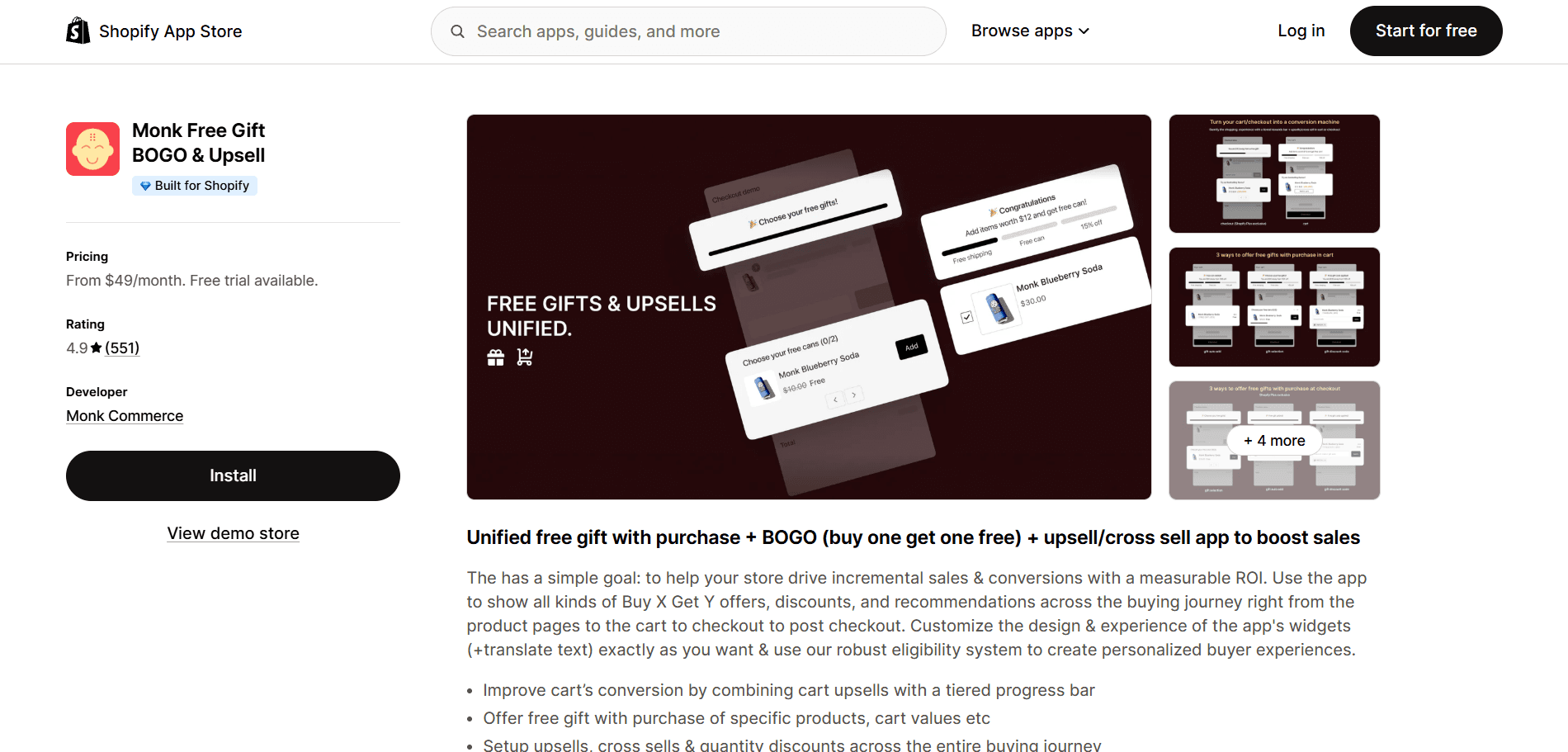
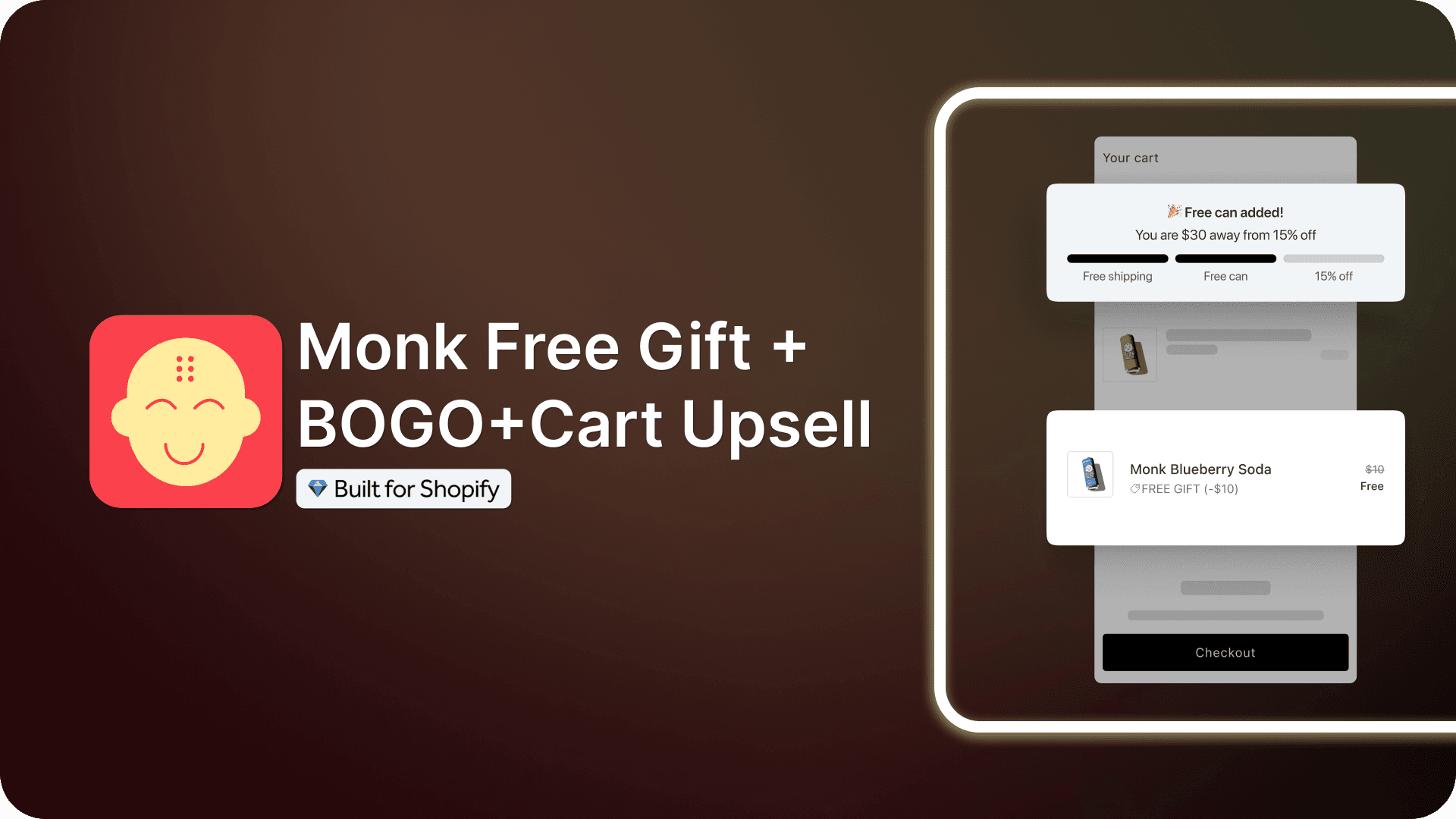
Monk Free Gift+BOGO is built specifically for Shopify merchants who want to turn the cart and checkout into personalized conversion moments. It goes well beyond basic discount codes. The app lets you design intelligent offer flows that adapt to what is already in a customer's cart, how much they have spent, and what products they have purchased before.
Key personalization features:
Smart free gift offers that trigger based on cart value thresholds, specific products, or customer tags so every offer feels earned, not generic.
BOGO and tiered discount logic that can be customized by customer segment, product collection, or purchase history.
Cross-sell and upsell widgets at cart and checkout that surface relevant add-ons based on what is currently in the cart.
A gift-with-purchase flow that lets customers choose their free gift, adding a layer of personalization that feels like a reward rather than a promotion.
Progress bars that show customers how close they are to unlocking a benefit, encouraging organic growth in order value.
Rating: 4.9/5
Pricing: Free plan available. Paid plans start from $49/month.
LimeSpot AI Bundles & Upsells
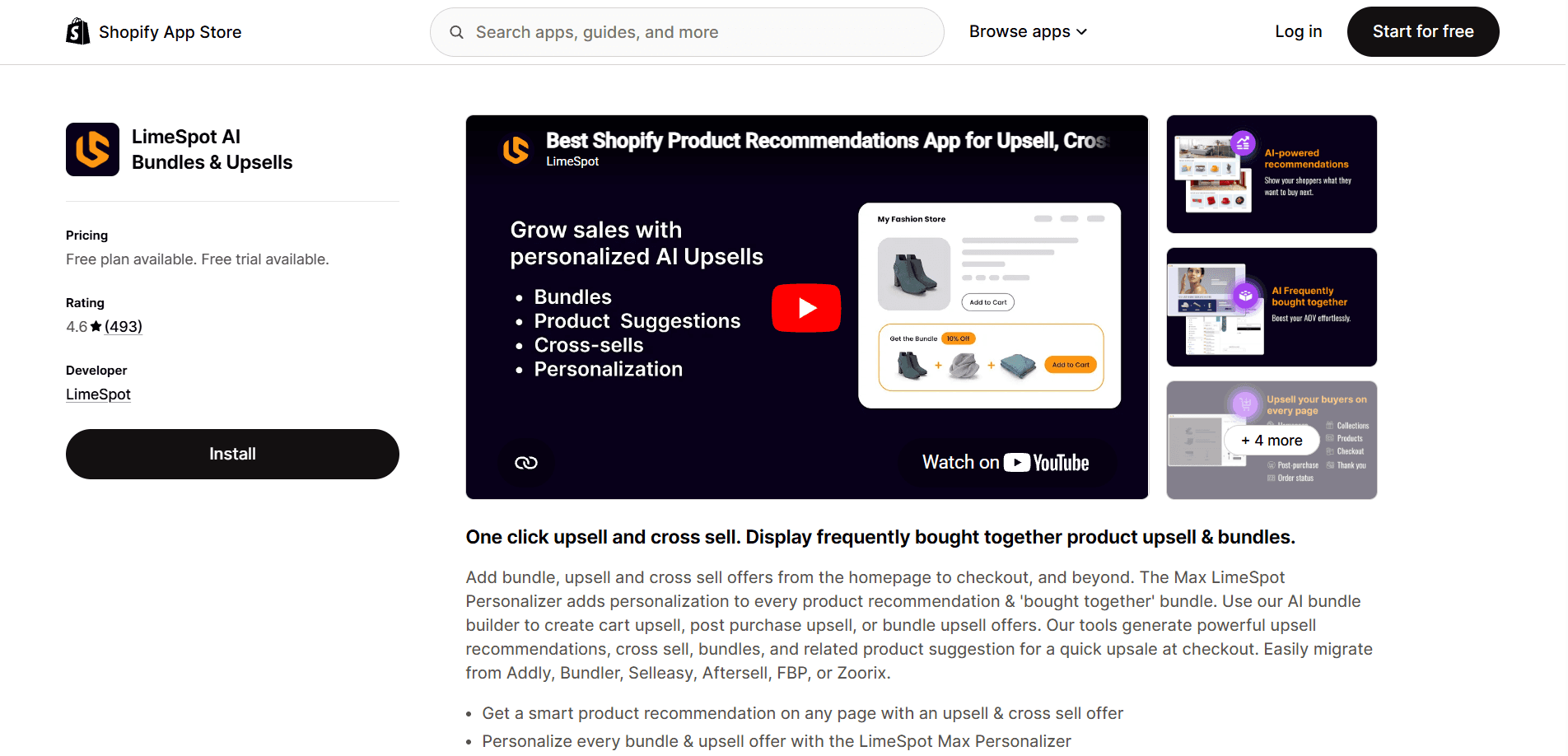
LimeSpot uses AI to generate product recommendations across your store: on product pages, in the cart, on the homepage, and in emails. It learns from browsing and purchase behavior over time, making recommendations progressively more accurate.
Key personalization features:
AI-powered 'You may also like' and 'Frequently bought together' recommendation widgets.
Personalized landing pages for different audience segments.
Integration with email platforms to carry recommendations into campaigns.
Real-time analytics on which recommendations are driving revenue.
Rating: 4.6/5
Pricing: Free plan available for development stores. Paid plans start from $9.99/month.
Zepto Product Personalizer
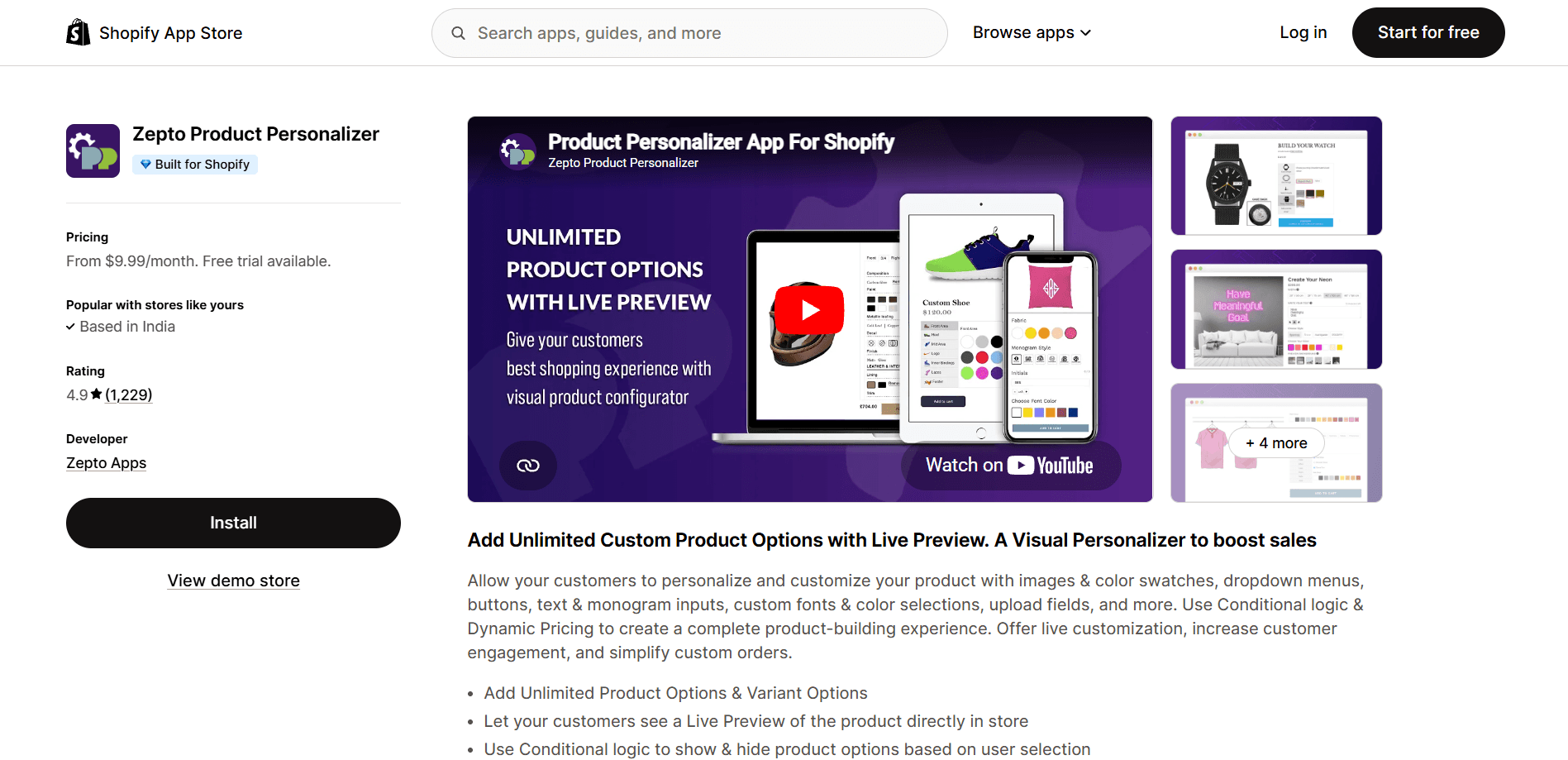
Zepto focuses on product-level personalization, allowing customers to customize items with their name, a message, an image, or other personal details before purchase. This is particularly valuable for gift-focused stores, print-on-demand businesses, and any brand whose products benefit from customization.
Key personalization features:
Live product preview as customers add personalization.
Custom options include text fields, image uploads, dropdowns, and color pickers.
Conditional logic ensures certain options appear only when others are selected, keeping the experience clean.
Supports complex pricing rules for add-on customizations.
Rating: 4.9/5
Pricing: Plans start from $9.99/month with a free trial available.
Klaviyo: Email Marketing & SMS
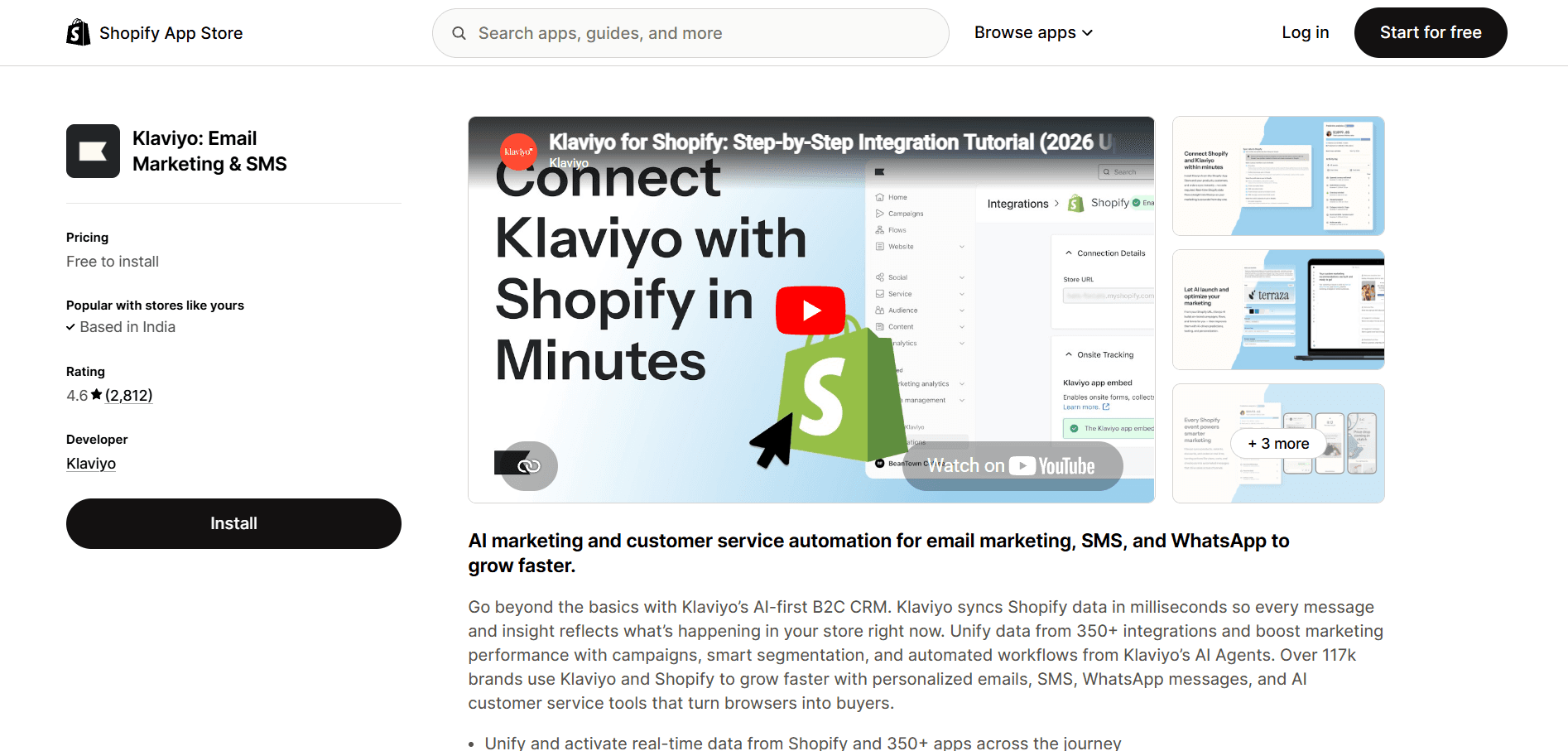
Klaviyo is the leading email and SMS marketing platform for Shopify stores, and its strength lies in behavioral segmentation and automated personalized flows. It connects directly to your Shopify data to power campaigns that feel individually tailored.
Key personalization features:
Automated flows triggered by specific behaviors, such as browsing, cart abandonment, purchase, and win-back.
Deep segmentation based on purchase history, engagement level, predicted lifetime value, and more.
Dynamic email content that changes based on the recipient's data, including personalized product recommendations within emails.
Predictive analytics that identifies customers most likely to churn or make a high-value purchase.
Rating: 4.6/5
Pricing: Free up to 250 contacts. Paid plans scale with contact list size, starting around $15/month.
App name | Pricing | Rating | Best for | How it helps |
Monk Free Gift & Cart Upsell | Free plan · from $49/mo | 4.9 ⭐ | Cart & checkout offers | Triggers smart free gift offers based on cart value, product, or customer tags. Runs BOGO and tiered discounts by segment. Surfaces cross-sell and upsell widgets at cart and checkout. Lets customers choose their free gift and shows progress bars toward unlocking benefits. |
LimeSpot AI Bundles & Upsells | Free for dev stores · from $9.99/mo | 4.6⭐ | AI product recommendations | Uses AI to surface "you may also like" and "frequently bought together" widgets across product pages, cart, and homepage. Builds personalized landing pages per audience segment. Integrates with email platforms to carry recommendations into campaigns, with real-time revenue analytics. |
Zepto Product Personalizer | Free trial · from $9.99/mo | 4.9 ⭐ | Product customization | Lets customers personalize items with names, messages, images, or colors before purchase, with a live product preview. Supports conditional logic so options only appear when relevant. Handles complex add-on pricing rules. Best suited for gift stores and print-on-demand brands. |
Klaviyo | Free up to 250 contacts · from ~$15/mo | 4.6 ⭐ | Email & SMS personalization | Powers automated flows triggered by browsing, cart abandonment, purchases, and win-back events. Deep segmentation by purchase history, engagement, and predicted lifetime value. Sends dynamic emails with personalized product recommendations per recipient. Flags customers likely to churn or make high-value purchases. |
The Future of Ecommerce Personalization
Personalization is only going to get more powerful. AI is moving toward building a unique model for each individual shopper, adjusting every touchpoint in real time rather than relying on broad segments. Predictive tools will anticipate what a customer wants before they search for it.
As third-party cookies disappear, the stores that have already built loyalty programs, preference quizzes, and wishlists will have a natural data advantage. And personalization will expand beyond which products are shown to the actual words used, with email copy and on-site messaging dynamically written to match how each customer communicates.
The stores that treat personalization as a continuous practice are the ones that build real loyalty. You do not need to do everything at once. Start with your highest-impact touchpoints, use the right tools, and let it grow from there.
Frequently Asked Questions
How does ecommerce personalization improve conversions?
Personalization improves conversions by making every customer's experience more relevant. When shoppers see products that match their interests, receive offers timed to their behavior, and get content that speaks to their specific needs, they make purchase decisions faster and with more confidence. It removes the friction of irrelevant browsing and replaces it with a path to exactly what they are looking for.
How does AI help in ecommerce personalization?
AI processes large volumes of customer data and identifies patterns no human team could spot at scale. It then uses those patterns to make real-time decisions: which products to recommend, which offer to surface, which email to send. AI also improves over time, meaning personalization becomes more accurate as it learns more about each customer.
What data is used for ecommerce personalization?
The most commonly used data includes on-site behavior (pages viewed, products clicked, time spent), purchase history, cart activity, email engagement, location, device type, and demographic information, where available.
How can Shopify stores implement personalization?
Shopify stores can implement personalization by installing dedicated apps that handle recommendation engines, personalized offers, behavioral email flows, and dynamic content. Most personalization apps on Shopify integrate directly with your store data without requiring custom development.
Can ecommerce personalization increase average order value?
When customers are shown relevant upsells at checkout, complementary products on product pages, and incentives tied to spending thresholds, they naturally add more to their order. The key is that these suggestions feel helpful rather than forced, which only happens when they are based on actual customer data rather than generic logic.
How does personalization improve customer retention?
Customers stay loyal to stores that feel like they understand them. Personalization creates that feeling at every touchpoint with a timely replenishment reminder, a reward that reflects actual purchase history, and a product suggestion that lands perfectly. Over time, these experiences build a relationship that makes switching to a competitor feel like starting from scratch.
What are examples of ecommerce personalization?
Examples of ecommerce personalization include product recommendation carousels based on browsing history, dynamic homepages that change for returning versus new visitors, cart abandonment emails that reference specific abandoned items, birthday discount emails, free gift offers triggered when a customer reaches a cart value threshold, back-in-stock alerts for previously viewed products, and size recommendations based on past purchases.
Ecommerce Personalization Guide to Improve Conversions in 2026
Summary
Ecommerce personalization helps Shopify stores increase conversions by delivering relevant, tailored experiences to each customer. By using data like browsing behavior, purchase history, and preferences, merchants can show personalized product recommendations, dynamic content, and targeted offers. This reduces friction, improves customer experience, and boosts average order value. From personalized emails to smart upsells and checkout optimization, personalization drives repeat purchases and loyalty. With the right tools, Shopify stores can implement scalable personalization strategies that turn visitors into high-value customers.
So many websites and Shopify stores are selling exactly what you sell. So why should customers choose you? The answer isn't just a better product; it's a better experience.
And that experience starts with personalization.
Personalization means treating each customer as an individual, remembering their preferences, showing them what's actually relevant to them, and making them feel seen rather than just sold to.
Research shows that 8 in 10 consumers are more likely to buy from a brand that offers them a personalized experience. Done consistently, personalization builds a loyal customer base that keeps coming back because your store gets them.
Ready to get started? Here are the top strategies and tools you can use to bring real, meaningful personalization to your ecommerce store.
What is Ecommerce Personalization?
At its core, ecommerce personalization is about making every customer feel like your store was built specifically for them. You invisibilize the thousands of other people who visited that same day by giving every customer special treatment.
Now, to add this personal touch, brands leverage everything they know about a customer. This includes their behavior, preferences, purchase history, location, or even the time of day. They use this to show every customer a unique email, homepage, and even different recommendations.
Let's look at an example to better understand this. Imagine two customers visit your online skincare store. One is a 28-year-old who always buys hydration products and lives in a dry, cold climate. The other is a 45-year-old who has previously purchased anti-aging serums. Without personalization, both land on the same homepage with the same featured products and the same "top picks," most of which are irrelevant to at least one of them. On the other hand, with personalization, the first customer sees a banner for your bestselling hydrating winter moisturizer. The second sees a curated collection of serums and firming creams. Both of them feel like your store understands what they need, and that feeling is exactly what turns a casual browser into a buyer. |
How Ecommerce Personalization Works
Personalization might feel like magic from the customer's side, but behind the scenes, it's a pretty logical process. It all comes down to three things: understanding who your customers are, grouping them in ways that make sense, and then using smart technology to act on that understanding in real time. Here's how it actually works:
Customer Data Collection
Every time a customer interacts with your store, they leave behind small but meaningful signals. What pages did they browse? What products did they click on? What did they add to their cart but never buy? Where are they located? Are they visiting from their phone at 11 pm or a desktop on a Monday morning? Did they open your last email?
All of this information gets collected quietly in the background through cookies, tracking pixels, account activity, purchase history, and on-site behavior. The more data you collect over time, the sharper your personalization becomes.
Segmentation and User Profiles
After collecting data, the next step is making sense of it, or something we call segmentation.
It is the process of grouping your customers based on shared characteristics or behaviors.
Each of these groups has different needs, motivations, and factors that will move them to buy. So they deserve different messaging, different offers, and different experiences.
From these segments, your store builds individual user profiles. It is your store's memory. Every visit, every purchase, every click adds another layer to that profile and makes the next interaction a little more relevant than the last.
AI and Machine Learning in Personalization
Processing millions of data points to make real-time decisions for every individual customer simultaneously is next to impossible. That's where AI and machine learning come in.
When you land on an Amazon product page and see "Customers who bought this also bought…" that's machine learning at work, identifying patterns across millions of purchases and surfacing what's most likely to interest you specifically right now.
For your e-commerce store, this could mean an AI-powered recommendation engine suggesting the perfect upsell at checkout, a dynamic homepage that rearranges itself based on what a returning visitor has shown interest in, or a smart email tool that figures out the best time to reach each subscriber based on when they actually open emails.
Why Ecommerce Personalization is Important for Conversion Growth in Shopify
Personalization directly addresses one of the biggest problems in ecommerce,i.e, relevance.
For Shopify specifically, personalization improves conversion in four concrete ways:
Reduces Friction: Customers find what they want faster, so they do not leave out of frustration.
Increases average order value: Relevant upsells and cross-sells at the right moment feel helpful, so customers add more items.
Builds repeat purchase habits: Customers who remember the personalized experience you gave them come back without needing to be heavily retargeted.
Lowers cart abandonment: Personalized recovery campaigns and timely nudges bring shoppers back before they forget you.
For any Shopify store looking to grow conversions in a competitive market, personalization is the core strategy.
Types of Ecommerce Personalization
Personalization shows up at every stage of the customer journey. Here are the six most impactful types for Shopify stores:
Personalized Product Recommendations
This is the most visible form of personalization. Instead of showing every visitor the same bestsellers, your store surfaces products based on what each individual has browsed, purchased, or shown interest in. A customer who keeps looking at running shoes should see complementary gear, not office furniture.
Dynamic Homepage Personalization
Your homepage does not have to look the same for every visitor. A returning customer who previously bought from your skincare range can see a homepage featuring your latest skincare launches. Dynamic homepages adapt in real time based on who is visiting, making the first impression far more relevant.
Personalized Search Results
When a customer searches for something on your store, the order and type of results they see can be personalized based on their previous behavior. Someone who consistently buys premium products should see premium options first. Someone who filters by size or color should have those preferences applied automatically next time.
Personalized Email Marketing
Generic batch-and-blast emails are one of the fastest ways to get unsubscribed. Personalized email marketing means sending the right message to the right segment at the right time. For example, send a restock alert for something a customer previously viewed, a loyalty reward on their anniversary with your brand, or a product recommendation based on their last purchase.
Personalized Offers and Discounts
Not every customer needs the same incentive to convert. A new visitor might need a first-purchase discount. A loyal customer who has bought five times deserves a reward that reflects their loyalty, rather than the same 10% off you offer everyone. Personalized offers can also be triggered by behavior: a customer who has been hovering over a product for a week might respond well to a limited-time deal on exactly that item.
Personalized Checkout Experience
Personalized checkout can mean surfacing a relevant add-on based on what is already in the cart, showing a free shipping progress bar calibrated to the customer's order size, or presenting a gift option to someone who has bought gifts before. Small personalization touches at checkout can meaningfully increase order value without adding friction.
Best Ecommerce Personalization Strategies to Improve Conversions in Shopify
Here are some of the top ecommerce personalization strategies that instantly boost customer interest:
Create Personalized Shopping Journeys
Map out different customer types and create journeys that feel coherent for each one. A first-time visitor, a repeat buyer, and a lapsed customer all need different messaging and incentives. Building these journeys intentionally ensures no customer falls through the cracks of a generic experience.
Optimize Mobile Personalization
More than half of ecommerce traffic comes from mobile, and mobile shoppers behave differently. They browse in shorter bursts, have less patience for cluttered pages, and are more likely to purchase impulsively. Personalization on mobile needs to be fast and visual. Prioritize personalized push notifications, mobile-optimized recommendation carousels, and simplified, one- or two-tap personalized checkout flows.
Personalize Cart Recovery Campaigns
Cart abandonment is one of the most recoverable losses in ecommerce. The mistake most stores make is sending a generic 'You left something behind' email to everyone. Instead, personalize the recovery message based on what was in the cart, the customer's history, and how long it has been since they abandoned. A high-value cart might warrant a personal note and a small incentive. A repeat customer might just need a simple reminder. Timing and tone both matter.
Implement Smart Upselling and Cross-Selling
Upsells and cross-sells only work when they are genuinely relevant. Showing a phone case to someone buying a phone is helpful. Showing the same phone case to someone buying a kitchen appliance is noise. Smart upselling means using purchase data and browsing history to surface the right complementary products at the right moment.
Common Ecommerce Personalization Mistakes to Avoid in Shopify
Poorly executed personalization can be just as damaging as no personalization at all. Here are the mistakes Shopify stores make most often:
Personalizing with too little data: If you have only one or two data points on a customer, making strong personalization assumptions can backfire. Show a new visitor a generic best-sellers list rather than risking irrelevant recommendations.
Over-personalizing every touchpoint: Not every part of your store needs to be dynamically personalized. Focus personalization on the areas with the greatest impact, such as product recommendations, email content, checkout upsells, and cart recovery. Trying to personalize everything often means doing nothing particularly well.
Not updating segments regularly: A customer who bought winter boots in December has different needs in June. Segments and user profiles should be updated continuously to keep personalization relevant. Static segmentation leads to recommendations and emails that feel out of date and tone-deaf.
Skipping A/B testing: Personalization assumptions need to be validated. Just because something feels like it should work does not mean it does. Test different recommendation placements, different offer thresholds, and different email timings.
Privacy and Data Protection in Ecommerce Personalization in Shopify
Before you begin personalizing your store for customers, there’s an extremely important step to take: privacy and data protection. Personalization is only sustainable when customers trust that their data is being used responsibly. As privacy regulations become stricter and customers become more aware of how their data is used, Shopify stores need to approach data collection thoughtfully.
The key regulations to be aware of include GDPR (for customers in the European Union), CCPA (for customers in California), and similar regional laws that are emerging globally. These regulations generally require that you collect only the data you need, disclose how it is used, and give customers the ability to opt out or request deletion. Here is what responsible personalization looks like in practice:
Be transparent in your privacy policy about what data you collect and how it informs the shopping experience. Plain language works better than legal jargon because customers are more likely to trust you if they understand what is happening.
Use honest cookie consent banners. Do not pre-check consent boxes or bury opt-outs. Customers who consent willingly are far more valuable than those whose data is collected without clear agreement.
Work with personalization tools that are GDPR- and CCPA-compliant. Check the data processing agreements of every app you install on your Shopify store.
Prefer first-party data, collected directly from your own store, email sign-ups, and loyalty programs, over third-party data. First-party data is more reliable, more compliant, and more likely to remain accessible as cookie regulations tighten.
4 Must-Have Ecommerce Personalization Tools in Shopify
Choosing the right tools is what moves personalization from a concept to a working system. Here are the top-rated tools Shopify stores use to deliver personalized experiences:
Monk Free Gift+BOGO is built specifically for Shopify merchants who want to turn the cart and checkout into personalized conversion moments. It goes well beyond basic discount codes. The app lets you design intelligent offer flows that adapt to what is already in a customer's cart, how much they have spent, and what products they have purchased before.
Key personalization features:
Smart free gift offers that trigger based on cart value thresholds, specific products, or customer tags so every offer feels earned, not generic.
BOGO and tiered discount logic that can be customized by customer segment, product collection, or purchase history.
Cross-sell and upsell widgets at cart and checkout that surface relevant add-ons based on what is currently in the cart.
A gift-with-purchase flow that lets customers choose their free gift, adding a layer of personalization that feels like a reward rather than a promotion.
Progress bars that show customers how close they are to unlocking a benefit, encouraging organic growth in order value.
Rating: 4.9/5
Pricing: Free plan available. Paid plans start from $49/month.
LimeSpot AI Bundles & Upsells
LimeSpot uses AI to generate product recommendations across your store: on product pages, in the cart, on the homepage, and in emails. It learns from browsing and purchase behavior over time, making recommendations progressively more accurate.
Key personalization features:
AI-powered 'You may also like' and 'Frequently bought together' recommendation widgets.
Personalized landing pages for different audience segments.
Integration with email platforms to carry recommendations into campaigns.
Real-time analytics on which recommendations are driving revenue.
Rating: 4.6/5
Pricing: Free plan available for development stores. Paid plans start from $9.99/month.
Zepto Product Personalizer
Zepto focuses on product-level personalization, allowing customers to customize items with their name, a message, an image, or other personal details before purchase. This is particularly valuable for gift-focused stores, print-on-demand businesses, and any brand whose products benefit from customization.
Key personalization features:
Live product preview as customers add personalization.
Custom options include text fields, image uploads, dropdowns, and color pickers.
Conditional logic ensures certain options appear only when others are selected, keeping the experience clean.
Supports complex pricing rules for add-on customizations.
Rating: 4.9/5
Pricing: Plans start from $9.99/month with a free trial available.
Klaviyo: Email Marketing & SMS
Klaviyo is the leading email and SMS marketing platform for Shopify stores, and its strength lies in behavioral segmentation and automated personalized flows. It connects directly to your Shopify data to power campaigns that feel individually tailored.
Key personalization features:
Automated flows triggered by specific behaviors, such as browsing, cart abandonment, purchase, and win-back.
Deep segmentation based on purchase history, engagement level, predicted lifetime value, and more.
Dynamic email content that changes based on the recipient's data, including personalized product recommendations within emails.
Predictive analytics that identifies customers most likely to churn or make a high-value purchase.
Rating: 4.6/5
Pricing: Free up to 250 contacts. Paid plans scale with contact list size, starting around $15/month.
App name | Pricing | Rating | Best for | How it helps |
Monk Free Gift & Cart Upsell | Free plan · from $49/mo | 4.9 ⭐ | Cart & checkout offers | Triggers smart free gift offers based on cart value, product, or customer tags. Runs BOGO and tiered discounts by segment. Surfaces cross-sell and upsell widgets at cart and checkout. Lets customers choose their free gift and shows progress bars toward unlocking benefits. |
LimeSpot AI Bundles & Upsells | Free for dev stores · from $9.99/mo | 4.6⭐ | AI product recommendations | Uses AI to surface "you may also like" and "frequently bought together" widgets across product pages, cart, and homepage. Builds personalized landing pages per audience segment. Integrates with email platforms to carry recommendations into campaigns, with real-time revenue analytics. |
Zepto Product Personalizer | Free trial · from $9.99/mo | 4.9 ⭐ | Product customization | Lets customers personalize items with names, messages, images, or colors before purchase, with a live product preview. Supports conditional logic so options only appear when relevant. Handles complex add-on pricing rules. Best suited for gift stores and print-on-demand brands. |
Klaviyo | Free up to 250 contacts · from ~$15/mo | 4.6 ⭐ | Email & SMS personalization | Powers automated flows triggered by browsing, cart abandonment, purchases, and win-back events. Deep segmentation by purchase history, engagement, and predicted lifetime value. Sends dynamic emails with personalized product recommendations per recipient. Flags customers likely to churn or make high-value purchases. |
The Future of Ecommerce Personalization
Personalization is only going to get more powerful. AI is moving toward building a unique model for each individual shopper, adjusting every touchpoint in real time rather than relying on broad segments. Predictive tools will anticipate what a customer wants before they search for it.
As third-party cookies disappear, the stores that have already built loyalty programs, preference quizzes, and wishlists will have a natural data advantage. And personalization will expand beyond which products are shown to the actual words used, with email copy and on-site messaging dynamically written to match how each customer communicates.
The stores that treat personalization as a continuous practice are the ones that build real loyalty. You do not need to do everything at once. Start with your highest-impact touchpoints, use the right tools, and let it grow from there.
Frequently Asked Questions
How does ecommerce personalization improve conversions?
Personalization improves conversions by making every customer's experience more relevant. When shoppers see products that match their interests, receive offers timed to their behavior, and get content that speaks to their specific needs, they make purchase decisions faster and with more confidence. It removes the friction of irrelevant browsing and replaces it with a path to exactly what they are looking for.
How does AI help in ecommerce personalization?
AI processes large volumes of customer data and identifies patterns no human team could spot at scale. It then uses those patterns to make real-time decisions: which products to recommend, which offer to surface, which email to send. AI also improves over time, meaning personalization becomes more accurate as it learns more about each customer.
What data is used for ecommerce personalization?
The most commonly used data includes on-site behavior (pages viewed, products clicked, time spent), purchase history, cart activity, email engagement, location, device type, and demographic information, where available.
How can Shopify stores implement personalization?
Shopify stores can implement personalization by installing dedicated apps that handle recommendation engines, personalized offers, behavioral email flows, and dynamic content. Most personalization apps on Shopify integrate directly with your store data without requiring custom development.
Can ecommerce personalization increase average order value?
When customers are shown relevant upsells at checkout, complementary products on product pages, and incentives tied to spending thresholds, they naturally add more to their order. The key is that these suggestions feel helpful rather than forced, which only happens when they are based on actual customer data rather than generic logic.
How does personalization improve customer retention?
Customers stay loyal to stores that feel like they understand them. Personalization creates that feeling at every touchpoint with a timely replenishment reminder, a reward that reflects actual purchase history, and a product suggestion that lands perfectly. Over time, these experiences build a relationship that makes switching to a competitor feel like starting from scratch.
What are examples of ecommerce personalization?
Examples of ecommerce personalization include product recommendation carousels based on browsing history, dynamic homepages that change for returning versus new visitors, cart abandonment emails that reference specific abandoned items, birthday discount emails, free gift offers triggered when a customer reaches a cart value threshold, back-in-stock alerts for previously viewed products, and size recommendations based on past purchases.
Kashish Jain
Guest Writer
A Shopify and ecommerce writer passionate about simplifying complex topics into actionable, data-backed content for merchants and online businesses.
Contents
Related Articles
Shopify Product Recommendation Strategies to Increase AOV & Conversions
Cart Upsell Strategies for Shopify Stores to Increase AOV
Shopify Upselling Guide for Beginners
Get Monk Free Gift app for just $1/month this Black Friday
First month: $1 after your 7-day free trial. All features included. Offer live!
Claim offer now

Get Monk Free Gift app for just $1/month this Black Friday
First month: $1 after your 7-day free trial. All features included. Offer live!
Claim offer now
Get Monk Free Gift app for just $1/month this Black Friday
First month: $1 after your 7-day free trial. All features included. Offer live!
Claim offer now